Nearly 30 years after fracturing her back in a bus accident, Gloria Estefan is standing tall. At 61, she's performing to adoring crowds, earning distinguished honors, taking her Broadway show to London's West End, and—perhaps most inspiring—championing new research that enables others who are paralyzed to move and walk again.
Estefan, the beloved voice of the Miami Sound Machine—best known for the Cuban-infused hit songs "Conga," "1-2-3," and "Rhythm Is Gonna Get You"—rode her talent to worldwide fame in the 1980s.
It was another ride, however, that nearly ended Estefan's life. On an unseasonably cold day in March 1990, her tour bus was traveling through Pennsylvania's Pocono Mountains when a snowstorm rolled in, wreaking havoc on the highway. "We were rear-ended by a fully loaded 18-wheel tractor-trailer," Estefan says. "It pushed our bus into another tractor-trailer that was crammed with steel cables." The nasty collision was part of a seven-mile pileup.
The crash left Estefan "within a millimeter of being in a wheelchair for the rest of her life," says Barth A. Green, MD, neurosurgeon and co-founder and chairman of the Miami Project to Cure Paralysis, a research center Estefan supports through fundraising, personal philanthropy, and patient outreach.
The singer describes coming to after the accident, unable to move on her own. She felt searing pain in her back and "a strong metallic taste in my mouth" and noticed "it was snowing inside the bus." The force of the impact had "sliced open the front of our bus," she says, leaving Estefan, as well as her husband, Emilio, and their son, Nayib, then 9—who both suffered minor injuries—exposed to the freezing elements for the 90 minutes it took paramedics to arrive.
"The fact that this happened in Pennsylvania on a cold day in March, rather than in Florida in July, may very well be the reason Gloria had such a remarkable recovery," says Dr. Green, referring to the role hypothermia plays in reducing damaging inflammation in spinal cord injury, concussion, and other trauma.
Estefan sustained a compression of her spinal cord in her lower middle back, just beneath the bottom of her rib cage, where the thoracic and lumbar regions meet. "Mechanically, the thoracic area has very little flexibility," Dr. Green explains. "It's rigid because the ribs stabilize the chest wall and that part of the spine. Below, in the lumbar region, it's loose as a goose. Nothing is there but vertebrae, disks, and muscles, which makes it very susceptible to injury."
A CT scan confirmed how dire things were. "The doctors were concerned about permanent paralysis," Estefan says. "My only hope was [for them] to operate and fuse my spine." The surgery itself was not without risk since manipulating an injured spine can cause paralysis too, says Dr. Green.
During the procedure, doctors used steel rods, screws, and hooks to realign and secure the dislocated vertebrae. Dr. Green says that with today's advanced technology and computerized monitoring systems, "the fusion would likely be shorter and the instrumentation more effective biomechanically, with less blood loss" and a lowered risk of paralysis during the surgery itself.
Arduous recovery
Estefan spent a month in the hospital after the operation. Upon returning home to convalesce, she wondered if she'd ever return to the stage and worried about raising her young son.
"My husband had to help bathe me, walk me, sit me up, turn me," she says of those first months at home. "He didn't sleep for more than 45 minutes at a time because that's how long I could sleep without waking from the pain to shift my position—which he had to help me do."
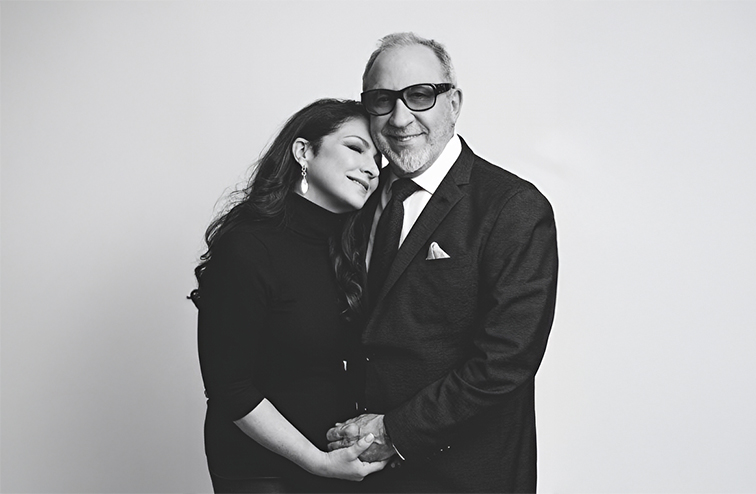
Their marriage, already rock-solid, grew even stronger. "Emilio was incredible through it all," she says, crediting not only him but their shared faith and the overwhelming support they received from friends, family, and fans.
Her physical progress was less reliable and came in slow increments. "I started rehabilitation six to eight weeks after surgery," Estefan says. At first, her only exercise "was to try to raise my feet two inches above the floor." Soon she started more intensive physical therapy using machines and other devices. A therapist would attach electrodes to her legs to prevent atrophy—the low-level electrical stimulation to specific muscles in her extremities facilitated contractions. "Little by little, my muscles did more of the work," Estefan says.
For three months she also exercised in a pool wearing a floating vest. "I'd strap plastic cups to my ankles to increase the resistance as I exercised my legs." After she got out of the pool, a therapist would apply heat to her back and massage her stiff muscles to decrease swelling. Eventually Estefan advanced to her home gym, where she dedicated several hours each day to her recovery.
It was tough emotionally. "I'd have to talk myself into getting out of bed," she admits. "I'd walk a few steps farther than the day before or go a few minutes longer on the equipment. I wanted to throw a party when I was [finally] able to put my underwear on by myself. I focused on small victories and kept the long game in the back of my mind."
Her love for Emilio and Nayib gave her the will to recover. "I was not going to give up without fighting as hard as I could to regain my health and strength and be the best I could be for them," Estefan says.
Career comeback
It took six months of daily rehabilitation before Estefan dared to believe she'd perform again. "So many people prayed for me," she says. "I thought getting back on stage would show them that if we work hard we can achieve our dreams."
Four years after the accident, Estefan won her first Grammy Award for the album Mi Tierra. (She's earned a total of three Grammys, with 12 nominations.) In 1994, she was also named MusiCares Person of the Year, which honors musicians for their artistic accomplishments and philanthropic efforts. Later that year, she gave birth to her daughter, Emily, despite having been warned her injury could prevent her from having more children.
In 1997, she launched the Gloria Estefan Foundation to support education, health, and cultural development. The foundation provides funding for a wide range of causes that touch the singer's heart, including no-kill animal shelters and dog parks, as well as aid for "people who fall through the cracks and can't get help from big organizations," she says. "We fill in where immediate help is needed."
Estefan brought her life story to Broadway with the 2015 musical On Your Feet!, which ran for two years in New York before touring the United States, the Netherlands, and Japan; it opens in London's West End in June. She was awarded the Kennedy Center Honors in 2017, the Gershwin Prize for Popular Song from the Library of Congress earlier this year, and with her husband received the Presidential Medal of Freedom from President Obama in 2015.