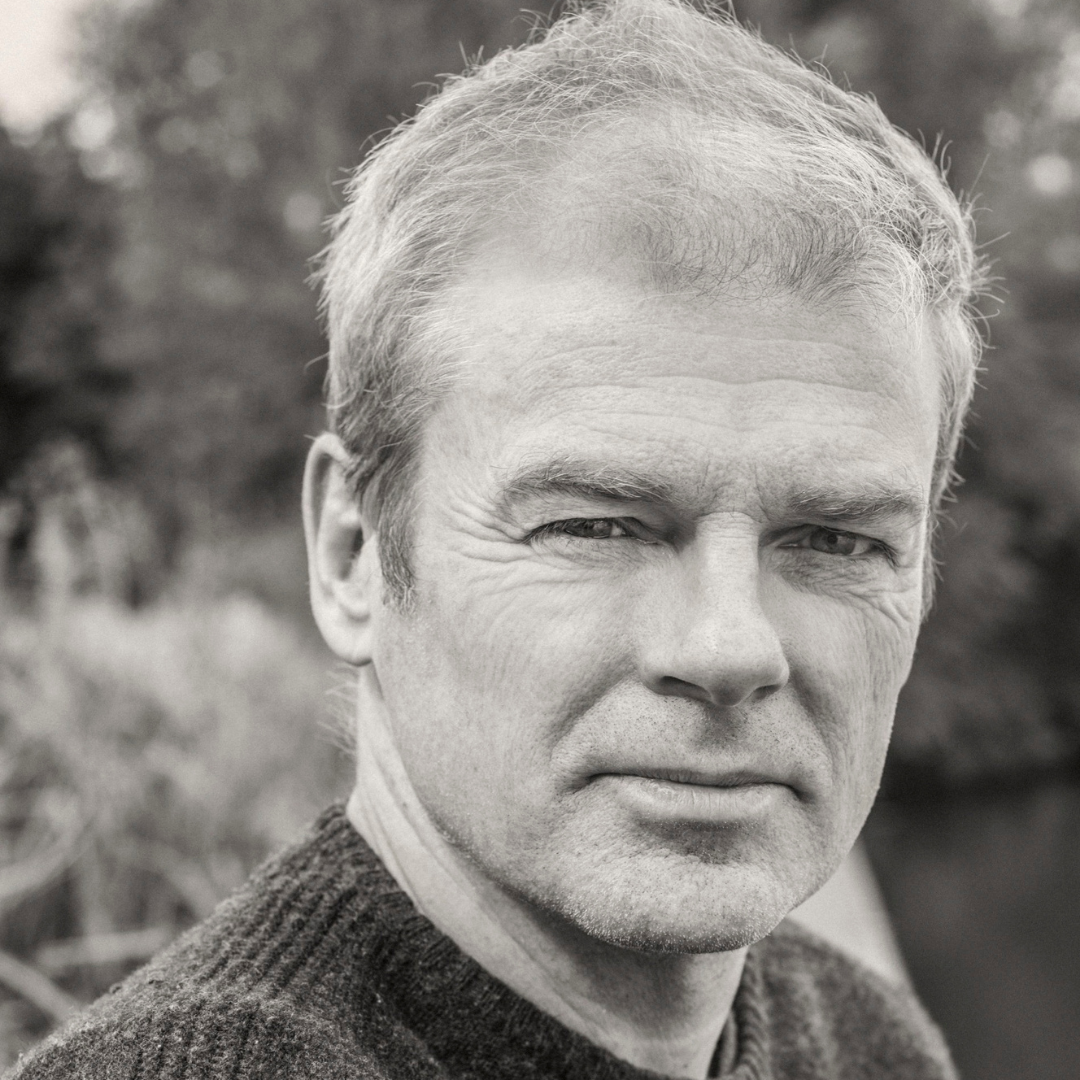
Listen to both parts of our interview with Bill Nye:
Co-host Dr. Katy Peters is joined by the one and only Bill Nye, an American science educator, mechanical engineer, television presenter, and author best known for hosting the Emmy Award–winning series Bill Nye the Science Guy. Bill discusses his family’s experience with a rare inherited ataxia and explains why he is partnering with the National Ataxia Foundation to advocate for research on another form of the disease, Friedreich ataxia. Dr. Peters is then joined by Dr. Stephan Züchner, a neurologist and geneticist who identified the genetic mutation responsible for the ataxia in Bill Nye’s family.

Follow our guest and hosts
Guest:
- Bill Nye @BillNye
Hosts
- Dr. Daniel Correa @NeuroDrCorrea
- Dr. Katy Peters @KatyPetersMDPhD
BrainHealth.com
- X: @AANBrainHealth
- Instagram: @AANBrainHealth
- Facebook: AANBrainHealth
Part 1 episode transcript
Dr. Correa:
From the American Academy of Neurology, I'm Dr. Daniel Correa.
Dr. Peters:
And I am Dr. Katy Peters, and this is the Brain & Life Podcast.
So when I was in grade school, every year we had a science fair where we'd have to investigate a scientific question or test an idea with an experiment. We'd have to present our projects, and usually it's like a frantic thing the night before when you're putting it on the poster board. I mean, I think it's fancier nowadays where they have it precut, but I remember the big magic marker and the poster board and-
Dr. Correa:
So much glue. So much glue everywhere.
Dr. Peters:
Oh, so much glue and last minute things. But we did have to present in front of our teachers and our judges. And in my case, I was in Catholic school, so it was all the Sisters and parents. Now, did you have to do a science fair as a kid?
Dr. Correa:
Yes, and I want to thank the patience of many of those teachers and my parents and uncle and all those who helped me with those last minute ideas. But there was a time I loved the sciences growing up, and even before I decided I wanted to be a physician, I wanted to be an astronaut, so I loved the science fairs and all the different topics. I remember even also the ones where we'd be learning science and engineering concepts and designing balsa wood buildings and bridges. And one of these challenges was to try and protect a fresh egg inside a capsule, like one of those landing capsules that the astronauts come back to earth in.
Dr. Peters:
Yeah.
Dr. Correa:
Yeah. Sadly, our team was not yet that NASA level, so I cannot recall exactly how many dozens of eggs, and hopefully not wasted food, hopefully truly committed investments in the name of our science education. But this is part of the growth and the fun that we have in our education and growing up with friends.
Dr. Peters:
So oh my gosh, my most famous science fair project in the sixth grade, which I did get first place for, also involved eggs. And I made a steam engine out of eggshells. And there were several exploding eggs before the actual experiment. So I remember as a sixth grader, I asked the Sisters to step back because all other previous experiments had exploded. But they did, it actually started to puff and went around in a little circle and turned on a light bulb, and boom, my scientific career started, I guess.
Dr. Correa:
Wow.
Dr. Peters:
So I love that we both had an egg experiment. That's excellent.
Dr. Correa:
Did you add that and have that as a part of your MD PhD application?
Dr. Peters:
Yeah, I'm sure it was there. I actually recently found the application, so I'll pull it out and check out if I won the sixth grade science fair if it's still there. And when we think about science and how childhood science fairs, but our guest today really is truly about bringing science into childhood, and it's Bill Nye the Science Guy. And the common theme was making science exciting, approachable, and fun. Now, did you watch Bill Nye the Science Guy as a kiddo?
Dr. Correa:
I loved Bill Nye and his show, but it was one that really I caught on more with my younger sisters and getting to watch and get them interested in science or later on after I had already established my interest for science in grade school. And it's been so great with the inspiration that he's brought for many for the sciences.
Dr. Peters:
Absolutely. So many people credit him to getting them interested and inspiring them. He's inspired generations of young scientists by showing them that curiosity, experimentation, and even failure are really essential parts of learning and growing. And he's best known for hosting the Emmy Award-winning series, Bill Nye the Science Guy, which combines humor experiments and clear explanations to teach basic scientific concepts.
He also does a lot about the environment and the environmental sciences. He is now lending his voice to advocate for research into inherited ataxias. That's why he's joining us today. And one of these ataxias actually is seen in his family as a type of gait disorder. And we get to talk with medical expert Dr. Stephan Zuchner, who is a neurologist and a geneticist, and he is actually the one who uncovered the underlying genetic mutation responsible for the ataxia in Bill Nye's family. So I hope everyone really enjoys listening to Bill and his story.
Hello, Brain & Life podcast audience. We are delighted to have our guest today, Bill Nye. He's an American science educator, mechanical engineer, television presenter, and author best known for hosting the Emmy winning series, Bill Nye the Science Guy, which combined humor, experiments, and clear explanations to teach basic scientific concepts. The series is best known for making science accessible to a wide audience, including many of our listeners. And through decades of media work, he has become a leading advocate for scientific literacy and climate awareness. Moreover, he is now partnering with the National Ataxia Foundation to also advocate for research into an inherited ataxia known as Friedreich's ataxia. And Bill, welcome to our Brain & Life podcast.
Bill Nye:
It's so good to be here, really.
Dr. Peters:
Great. And I just gave a little introduction about you, but can you first just tell us where you're joining us from today? I see there's a great picture of the world behind you.
Bill Nye:
Los Angeles, California. So that picture of earth was, I'm not joking, you guys, was given to me by Al Gore.
Dr. Peters:
Oh, wow.
Bill Nye:
So listeners may remember Al Gore. He was a government employee for a while. Anyway, if you get close to it, your eye in just a few moments, your eye goes to Hurricane Andrew, which was a huge deal back in the 20th century. Now, there have been a couple hurricanes bigger than Andrew, but it was the first, my recollection, this is from memory, it was the first Category 5.
Dr. Peters:
Wow.
Bill Nye:
That made landfall in North America. But now, we're having category six hurricanes on the open ocean and people are looking forward to them coming ashore someday. But that aside, that's big fun. That picture's big fun. This one is taken by our LightSail 2 spacecraft, The Planetary Society's LightSail 2, which was a big success made for perhaps a 20th of the budget of a conventional space agency mission. And then over here, those are the 29 clouds, the official 29 clouds of meteorology. And they do all sound alike, but it's the kind of thing I like to have on the walls. Back to you.
Dr. Peters:
Exactly. And I'm going to give a plug for what's back on my wall, I just got a picture of a butterfly neuron because I'm a neurologist.
Bill Nye:
Oh, God.
Dr. Peters:
That was created by one of my wonderful patients. And so I have to give her a plug because she created that picture.
Bill Nye:
Butterfly neuron.
Dr. Peters:
Yeah, butterfly neuron. It's like a brain butterfly with neuron tail coming out of it.
Bill Nye:
Wow.
Dr. Peters:
And I'm so glad to talk to you about science today. This is a lot of fun, Bill. So what first sparked your interest in science as a kid?
Bill Nye:
I've been asked this in the past, and I usually start by saying I don't remember. Seriously, it was so long ago. I thought science was amazing and cool and compelling. But there's a story I've told several times, and it is not apocryphal, it's fact-based. So we were playing cards and I'm going to say it was Crazy Eights. Some listeners may be familiar with Crazy Eights. I think I had just been promoted from kindergarten to first grade, and I got stung by a bee. And this was my first bee sting, and it was traumatic. I was crying. This is bad, this is bad. And then my mother put ammonia on it. And this is back when, I guess there are a few people still buy a bottle of ammonia. And everybody, it's the smell of Windex. That's the active ingredient in Windex. It somehow denatures the venom. But on the bottle, so it felt better, my sting felt better. But on the bottle's a skull and crossbones like my mother's trying to kill me, which I could understand. I was a rambunctious kid, but that was fascinating.
And then sometime after that, and just for the purpose of the story, I'll say it was later that summer, in The Washington Post, a newspaper, Ripley's, Believe It or Not has run a version of this story several times over the years. "According to aerodynamic theory, bees cannot fly."
And even as a kid, I went, "Wait a minute. Wait, the bees are fine. There is something wrong with your theory." I just thought that was fascinating. And then I ended up working at Boeing. And indeed, the details of bee flight were not really scientifically accepted to the mid-1990s. There's a lot of details about how they use their thorax as a spring. And they have some crazy thing-
Dr. Peters:
Okay.
Bill Nye:
... where their halteres, their secondary wings go backwards through this whirlpool with very little aerodynamic drag. It's amazing. It is amazing. So I go way back with that.
Dr. Peters:
So it goes back to really not just the birds, but also the bees, and Boeing.
Bill Nye:
Yes.
Dr. Peters:
I like that.
Bill Nye:
Birds and airplanes fly on very much the same principle, so I guess that's not surprising.
Dr. Peters:
So what gives you hope? So we just talked about the past, but what about the future? What gives you hope about the future of science and innovation?
Bill Nye:
Well, it's the most exciting time in human history scientifically. But as a guy who grew up in the US and loyal to the United States, a strange time when it comes to public health, so a strange time.
Dr. Peters:
And also for public education, I would think too.
Bill Nye:
Yes, it's a strange time. Built into the US system is change, so I'm anticipating some change soon and the pendulum will swing back to scientific leadership.
Dr. Peters:
And you mentioned health, and we're here to discuss really your advocacy regarding genetic ataxias such as Friedreich's ataxia. Can you just educate our listeners about what Friedreich's ataxia is and how it differs from other ataxias?
Bill Nye:
So Katy, Dr. Peters, I got to stop you right there. They got a whole thing now, it's no longer possessive. It's Friedreich ataxia. It's not even Friedreich anymore.
Dr. Peters:
Thank you.
Bill Nye:
It's a thing, man. And when you're involved in making videos about this, there's somebody there waving his or her finger at you. Anyway. So Nikolaus Friedreich did some rudimentary, compelling, irrefutable research on what's come to be called Friedreich ataxia. So ataxia is a word I grew up with because my family has a different related form, spinocerebellar 27B. Spinocerebellar ataxia is different but similar, if I may, to Friedreich ataxia. So there are repeating genes, repeating peptides, guanine, adenine, adenine, and DNA that if you get too many of them, you get Friedreich ataxia. And this has the unfortunate, miserable, troublesome feature that it can persist in people for generations, indeed for centuries. You can throw around the word a millennium or more. But if two people with this recessive gene sequence interact, can we say interact the way birds and bees interact?
Dr. Peters:
Yes, we can.
Bill Nye:
Yeah. Then you get kids, the potential 50/50 chance of kids having this miserable condition. So the word ataxia for me is very easy to understand. It comes from the Greek word taxi, which means walk or get around. So if you have ataxia, you can't walk very well. Not only that, you can't move. After a while, you can't speak very well, you can't keep your balance. We have a family joke, no swallowing, ha ha, because swallowing is one of the fine motor motions that is affected by our form of ataxia. And my understanding is also in Friedreich, because I've spent some time now with people with Friedreich ataxia and they report similar difficulties. So anyway, this is a bad thing, but it's just now coming to be understood. Although it was discovered, I guess in the 1860s by Nikolaus Friedreich or figured out. Now, there are therapies, physical therapies and drug, they're molecules that help people with Friedreich ataxia. So I got involved in it through spinocerebellar ataxia, but it is of a piece all in the purview of my beloved National Ataxia Foundation.
Dr. Peters:
And you essentially had family members that had this genetic form of spinocerebellar ataxia. What was the time span of you learning about that diagnosis and how did it impact your childhood even into adulthood?
Bill Nye:
My dad had it. His mother, my grandmother had it. And in my family, the story's interesting to me if you guys doze off. Anyway, Benjamin Nye came to the colony of Massachusetts in 1635. A whole nother completely different guy named Samuel Darby came to the colony of Maryland in 1650. Somehow, offspring of the Darbys connected, interacted with some Nyes, and they passed on this ataxia called, we whimsically refer to as the Darby Glide, because Samuel Darby was said to walk with an unsteady gait, he had ataxia. And so a feature of our ataxia is it doesn't kill you. You'll die with it, not from it, as they say. But it persists through generations. And it is passed on by a very similar gene repeat on a different gene than Friedreich, but related. I mean, related.
I grew up with it, my father falling down all the time saying it's just carelessness, dropping things, his fine motor skills degraded. It's troubling and fascinating to look at his handwriting when he was a teenager, and his handwriting when he was in his 70s and 80s. It just degrades. And my father's condition was almost certainly exacerbated by him being of a certain age, born of a certain time in the US, being forced to be right-handed. He was almost certainly a left-handed guy that was forced to write and do all sorts of things right-handed, which just made it... More difficult. But he would fall down often.
One day I came home and there was an ambulance in the driveway because he had fallen down the basement steps. And my brother will say, "Well, he was doing something he shouldn't have been doing."
But as my sister points out, the trouble with, my sister lives pretty much now in a wheelchair, when you have the Darby Glide, you're not aware of what you can't do. Some days you can write, some days you can swallow, some days you speak very clearly. Other days, you don't. And so in our family's case, there's clearly some emotional connection between what goes on in your cerebellum and what goes on with your emotional. Your emotional state, your cerebellum, and your fine motor skills are all intimately connected.
The cerebellum, everybody is, well, you're the experts, is the small part that in Germany, I was fascinated to learn is das Kleinhirn, the small brain. Cerebellum's the small brain. It just means the back of your brain. And it really is fascinating, but it's also, if you have ataxia, it's a drag, man. As my cousin says, that he's been asked if he's depressed. Said, "I'm not depressed, I'm just pissed off." I understand that. It's a frustrating condition that we are just now learning more about and finding new ways, and especially physical therapy and these new molecules, new drugs that are helping with it.
Dr. Peters:
Bill, thank you so much. I can't wait to hear more about that and the work you're doing with the National Ataxia Foundation in part two of this conversation next week.
Dr. Correa:
On the Brain & Life podcast and online, we share stories from people living with neurologic conditions, and the science that helps them navigate everyday life. Behind that progress are researchers working on ideas that could lead to better treatments, better understanding, and better care.
Dr. Peters:
The AAN Research Program has supported this kind of work for more than 30 years, but each year, far more researchers apply for funding than we're able to support.
Dr. Correa:
So if you're someone who values neuroscience that makes a real difference for patients and families and all of our communities, we invite you to join this effort. A donation to the AAN Research Program helps more promising research move forward. Learn more about this at aan.com/donate.
Dr. Peters:
Hello, Brain & Life podcast audience, and thank you for joining us again today. I'm delighted to have our expert today to discuss some very interesting topics, Dr. Stephan Zuchner. He's a Professor of Human Genetics and Neurology at the University of Miami Miller School of Medicine. He holds a degree from RWTH Aachen University from Germany, and really, we're going to dive in about his research today because it focuses on identifying strong genetic variations associated with a variety of human illnesses, particularly rare disorders, including a spectrum of neuromuscular, neurodegenerative, motor neuron disorders, ataxias, and more. And he's been involved in the discovery of several dozen disease genes that really now have permeated routine clinical genetic practice for people that have rare disorders. He's an advisor for various organizations such as ClinGen, Peripheral Nerve Society, The Genesis Project Foundation, the Charcot-Marie-Tooth Association, Hereditary Neuropathy Foundation, and Muscular Dystrophy Association. We're going to learn so much more.
Dr. Zuchner, welcome to the Brain & Life Podcast.
Dr. Zuchner:
Thanks, Katy. Glad to be here.
Dr. Peters:
We're so delighted to have you. Can you tell us a little bit more? I gave a short introduction, but can you tell us a little bit more about yourself and where you're joining us from today?
Dr. Zuchner:
Yeah. I'm a geneticist really by trade, if you like. Having been trained as a neurologist and neuropathologist, so the work I do mostly with genetics is trying to understand how your genetic makeup puts you at risk for neurological diseases such as ataxias, peripheral neuropathies and others. In more rare cases, actually, genes or changes in your genome can even cause the appearance of certain diseases, and this can even be carried in families. And those families often know that because there's not just one person with a certain neurological disease, but several of them. That's where we focus on trying to find these genetic changes. Many of them are known, but there are many still to be discovered, we believe. And once you have them, this is sort of ground zero in terms of biology.
Then from there, you can build up and try to understand why and how a certain change in your genome affects how brain cells, for instance, nerve cells, how they function or not function correctly. And that ultimately leads to a phenotype, however you say, or a disease. And then of course, once you know that, the hope is that we can come up with good ideas how to treat this. This is still the biggest bottleneck, I would say, the last part. How can we develop treatments?
Dr. Peters:
And I think it's so important because I have several patients in my line of work and seeing my patients and they're always like, "How did I get this? Does it run in my family?" Or they give a compelling family history.
And you're the board member of the Undiagnosed Diseases Network Foundation, also known as UDNF. Can you tell us more about your work with that organization and what does define an undiagnosed disease?
Dr. Zuchner:
Yeah, that's a very good question. I would say for the general audience, when we have medical problems, we go to see a doctor. And when we generally expect that the doctor will eventually give us an answer what's wrong and hopefully has a solution for it. It is true though that a substantial portion of patients do not receive a good answer. Or we as doctors sometimes are pretty good to give an answer that's not a real answer. And that's not a bad thing per se. You learn what exactly, what system in your body might not work correctly.
But doctors ask, and also, scientists ask themselves, "Okay, your cerebellum or you have an unsteady gait. What's the reason for that?" Right?
Dr. Peters:
Right.
Dr. Zuchner:
That's what neurologists do. And then they say, "Well, clearly after several examinations, the cerebellum, it's a part of your brain, an important part of your brain. It doesn't work as it should."
And so then you get a diagnosis, which might in this case be called ataxia, cerebellar ataxia. But what is it that makes your cerebellum not work correctly? And there are then many possibilities. I must say, first of all, as geneticists, we think of the world as two big categories. Things either come from your genes or from the environment.
Dr. Peters:
Right.
Dr. Zuchner:
The genes or the environment. And with environment, we pretty much mean everything outside of genes, which is very convenient. So this can include infections. This can include traumatic things like strokes that can affect the cerebellum. This can include side effects from medications and others. So they might have the very same effect on your body than say a gene that doesn't function. And that's sometimes the hard part, right? To figure out, is this from a gene that doesn't work or is it from the environment, whatever that is. And so there is a group of patients, children, but also grownups who have seen their doctors extensively, and they still don't get sufficient answers. So we call them undiagnosed patients, or they have undiagnosed diseases. And as scientists have and doctors have looked closer at these patients, and many of them, they keep finding causes of diseases that were so far unknown.
Dr. Peters:
Right.
Dr. Zuchner:
So it turns out there are many medicine we may perceive as this unbelievable treasure of knowledge, but it turns out there is a lot of things we still don't know about how diseases come about, how should we name them and so on. So that's what the Undiagnosed Diseases Network is trying to tackle. This is a network of physicians and scientists across the country, and they look specifically at patients that have seen many doctors without good answers. And this group has found many, many novel genetic defects, for instance, that can cause disease.
Dr. Peters:
I think that is so important because giving the answers to our patients and their families, particularly with the genetic disease, it's not just the implication for the patient themselves, it's also for the families. And then back to the scientists, once they find something, then that's an opportunity to understand that puzzle piece that fits from finding that gene and then hopefully finding treatments. Now, you mentioned the cerebellum, and we're going to dig a little deeper into a particular genetic disease or a cluster of genetic diseases called spinocerebellar ataxia. Can you just give us the basics of what that disease is?
Dr. Zuchner:
Yeah. So like many things in medicine, it is in the name, but it is a foreign language. So spinocerebellar really points to that there's something not working with your spinal cord, and with the cerebellum. And that leads to the expression of what we call ataxia. Symptoms like unsteady gait, difficulties in coordination of your limbs, movement. So that can affect walking, it can affect your hand and arm movement and so on. This can even affect your speech.
There's several known causes for spinocerebellar ataxias that are genetic in nature. And I must also say, what we have learned by studying these, we call them rare diseases, by studying them and studying the genetics and screening patients if they have a certain gene change or not, we found that it's not like a silo, spinocerebellar ataxias. And then there's another disease next to it of its own silo. Actually, these diseases, they overlap. So it makes it somewhat harder sometimes for doctors to name it correctly, but there are patients who might have a classic gene for spinocerebellar ataxia, but they may mainly express symptoms from the cerebellum, for instance, or they may more prominently express symptoms from the spinal cord.
And also these patients, when you look closer, depending a bit on the gene defect, they might express other symptoms like peripheral neuropathies, for instance. And they're not in a name, but they're also important for patients' lives, daily lives.
Dr. Peters:
Right.
Dr. Zuchner:
And so this might sound like a side discussion, but A, I would say first for patients, all these symptoms matter. And second, it reflects a little bit on where genetics has been going over the last decade. The borders of diseases are not so clearly marked, if you like. There is a lot of, call it overlap, a lot of blending in. So the name is absolutely there and valid, just, I guess want to emphasize a little bit that this is what we sometimes call a spectrum, a spectrum of symptoms and there are many such spectra and they can overlap. They can blend into each other.
Dr. Peters:
Just as a group for our Brain & Life group, we've been talking about the difference between a disease and symptoms, but how important the disease entity itself is, the name, but then really the care with the patients is all about what their symptoms are. And for this particular podcast, we interviewed Bill Nye.
Dr. Zuchner:
Yes.
Dr. Peters:
All of our listeners know him as the Science Guy, Bill Nye the Science Guy. And his family has spinocerebellar ataxia 27B, and I hope I'm correct about that.
Dr. Zuchner:
Yes.
Dr. Peters:
What is unique about this type of spinocerebellar ataxia?
Dr. Zuchner:
Right.
Dr. Peters:
The 27B.
Dr. Zuchner:
Yeah. Well, there you have it, right? What a name. SCA27B. Gosh, it sounds like a license plate.
Dr. Peters:
Yeah.
Dr. Zuchner:
Yes. So it is another form in some ways of a spinal cerebellar ataxia. That's really what it is. Physician scientists, they have reverted to numbering these different types. And so this is where over time, really decades of research, it just happened to be that it's 27. Some years ago, geneticists found a genetic defect in a particular gene called FGF14. Another abbreviation, FGF14. And that gene was determined to cause SCA27A.
Dr. Peters:
Okay.
Dr. Zuchner:
But it turned out there were very, very few patients ever diagnosed with SCA27A, so it's not a major form. It's very, very rare. We were working with a group from Canada that is important here from East Canada, from Quebec, from McGill University. And they have been following a number of families where in those families, over several generations even, they could trace family members who had this unsteady gait. And Bill Nye is not one of those families, but Bill Nye, as he very publicly explains, his family also.
Dr. Peters:
Right.
Dr. Zuchner:
I can trace this back actually I think almost 200 years, but he can explain this better. So there's some of these families, depending on how well they document things, this goes on and on. So we were working with this group at McGill, and they had done excellent work already and trying to find out what gene causes the ataxia in these Canadian families from Quebec, from Montreal.
And it just resulted basically in us working together because at my lab in Miami, we have been working on a unique type of genetic change or genetic mutation, which is called repeat expansion. Okay? Tandem repeat expansion. So I'll come back to this in a minute. Long story short, we were able to discover together that a change in this gene, but a very unusual location in this gene, which isn't part of the protein that's later made from this gene, there was one of these repeat expansion, tandem repeat expansions present.
And it turned out in these families, all the affected family members, they had this expansion. And all the individuals without disease, they did not have this expansion. They had the normal size, if you would like, at this position in the genome. And so we thought, great, this looks like, this explains it's a novel cause of SCA27, but because there was already 27A, which was classic mutations in this gene, and this was something unusual, like a tandem repeat expansion. The field eventually decided to call it 27B to make it distinct from the A, and there's some other arguments why we give it a B versus stick with the A.
Glad you mentioned this. 27B, to some surprise, has turned out first to be quite common in Eastern Canada, which has, as you know, a very French influence, French roots. And what we in genetics, we call it a founder population. And in some studies, some 60, 6-0, percent of ataxia patients who start disease later in life, so they have late-onset ataxia. Some 60% of them actually are caused by this SCA27B.
Dr. Peters:
Oh, fascinating.
Dr. Zuchner:
Which was a complete shocking revelation. We though this is another rare, potentially rare type, but it is now by far the most common form of ataxia in Canada, in East Canada for sure. And then of course, colleagues all over the world started screening for these cases. They looked in the undiagnosed disease patients, there you have it again, the undiagnosed diseases. They looked in those patients where they never were able to find a gene, or some other explanation for the ataxia. And they found, we have now well over 1,000 patients that we follow as a researchers. And this is the second most common ataxia overall of all the many ataxias, and it's for sure the most common type of ataxia amongst the patients who have it later in life. It starts late in life, so it's late-onset ataxia, so it has turned out to be a very, very important type of ataxia.
Dr. Peters:
Thank you, Dr. Zuchner. I'm looking forward to continuing this conversation in part two next week to hear more about testing and how this disease works in the way that is inherited in families.
Dr. Correa:
Thank you again for joining us today on the Brain & Life podcast. Follow and subscribe to this podcast so you don't miss our weekly episodes. You can also sign up to receive the Brain & Life Magazine for free at brainandlife.org.
Dr. Peters:
Also, for each episode, you can find out how to connect with our team and our guests along with great resources in our show notes. We love it when we hear your ideas or questions. You can send these in an email to blpodcast@brainandlife.org and leave us a message at (612) 928-6206.
Dr. Correa:
You could also find that information in our show notes, and you can follow Katy and me and the Brain & Life Magazine on many of your preferred social media channels. We're your hosts, Dr. Daniel Correa, connecting with you from New York City, and online at Neuro Dr. Correa.
Dr. Peters:
And Dr. Katy Peters joining you from Durham, North Carolina, and online at Katy Peters MD PhD.
Dr. Correa:
Most importantly, thank you and all of our community members that trust us with their health, and everyone living with neurologic conditions.
Dr. Peters:
We hope together we can take steps to better brain health and each thrive with our own abilities every day.
Dr. Correa:
Before you start the next episode, we would appreciate if you could give us five stars and leave a review. This helps others find the Brain & Life podcast. See you next week.
Part 2 episode transcript
Dr. Correa:
From the American Academy of Neurology, I'm Dr. Daniel Correa.
Dr. Peters:
And I am Dr. Katy Peters, and this is the Brain & Life Podcast.
Welcome back to the Brain & Life Podcast, everyone. And I know that we had so much fun listening to the first part with Bill Nye, The Science Guy, and also with our amazing expert, Dr. Stephan Züchner. And we have more because it was just so amazing all that Bill has done for his own family, but also for the National Ataxia Foundation. And we're going to really hone in on Bill's family connection with ataxia and understand it from his perspective.
And then also talk about these spinocerebellar ataxias with Dr. Stephan Züchner to understand more how they're inherited and how do they get passed down in families. So I hope you enjoy the second part of a great interview with Bill Nye, The Science Guy, and our expert, Dr. Stephan Züchner.
Welcome back, Bill. Let's continue our conversation from last week. The cerebellum is, I agree, it's always been the underrepresented, discussed part of the brain. And I agree with you, what's very interesting about the cerebellum is that there is a memory and cognitive component to it.
Bill Nye:
My sister talks about some days she can remember words and other days she has difficulty remembering words. It's fascinating because, as you point out, my understanding... I'm a mechanical engineer, man. Okay, but it is fascinating because there's some emotional component to the cerebellum which affects your, how to say, you're everything, your memory, your motor skills and your speech.
Dr. Peters:
We actually have a condition that we call cerebellar affective disorder-
Bill Nye:
There you go.
Dr. Peters:
...that can occur. And we see it, unfortunately, in our patients that have pediatric brain tumors, and it affects the cerebellum. And they can even develop a form of mutism, which is again, very rare. And this is why we need people to discuss this because if we don't know about the nervous structures and how they're affected and how it affects people in the community, that's what's so important about advocacy.
Bill Nye:
So I'm going to make a claim.
Dr. Peters:
Yes.
Bill Nye:
Two years ago, very few people that I met had heard the word ataxia. Now I meet many people who've heard it, and it could be because they know me or they've met me or they've watched these videos. But there's a dog food commercial where they say, "This dog food is good for your dog's ataxia." I mean, people, we made it to dog food commercials. I mean, two years ago, let alone 50 years ago, nobody was talking about dog ataxia. But dogs, an older dog, how to say, older dogs will have ataxic symptoms. So I claim a success right there, man.
Dr. Peters:
I agree. I think absolutely. Isn't it said that if you put babies or puppies in a commercial, it's going to be more appealing to people? So maybe that's how it happened.
Bill Nye:
Well, not just that. It's an extraordinary claim that this dog food company's making. Well, but really it's probably based on, I haven't studied it, but it's probably based on clinical research with veterinarians and so on. And if you're a dog owner who loves your pet, you certainly want the best for him or her. So address ataxia with this brand of dog food, yes.
Dr. Peters:
That's a really interesting factoid. Now, can you tell us a little bit about when you started your partnership with the National Ataxia Foundation?
Bill Nye:
I'll tell you, my brother especially was, "Bill, you should use your celebrity to do something for ataxia. You should do something. Why aren't you out there?" And I go, "Well, we all grew up with it." And in my family, we all live with it and there ain't much, not much you can do with it until two and a half years ago, two separate groups of researchers discovered the gene repeat that causes spinocerebellar ataxia 27B.
By the way, you probably know much more about it. It was first called SCA Spinocerebellar Ataxia 50, 5-0. But then they, it, you all realized that it was really part of 27. This is a breakthrough. By discovering the gene repeat, people in my family, my nieces, nephews, cousins, everybody can get tested. And then in the case of the grand people, grandnieces, grandnephews, they will be able to select embryos and eliminate it. They will be able to eliminate ataxia in this next, next generation or next, next, next generation of offspring. That is amazing.
Dr. Peters:
That is amazing.
Bill Nye:
And then furthermore, there are now molecules, drugs that are proving to be very effective against spinocerebellar and against Friedreich. So in other words, now there's something. Two and a half years ago, there was something I could do about it, so I'm doing it, and to a very limited extent. I do these videos with the National Ataxia Foundation raising awareness.
Dr. Peters:
And what has been your best accomplishment for the National Ataxia Foundation that you're most proud of right now?
Bill Nye:
Well, the videos. And so there are four we did literally in my kitchen. And then four more we did on this big fancy set that's a replica of the old lab, the old TV set. I'm very proud of those. And I wore a yellow tie today because there's a tradition that yellow is the color of giving, the color of philanthropy. So I have done a very, very modest amount of fundraising for the National Ataxia Foundation.
Dr. Peters:
And I think that's so important because advocacy can come in so many different formulas. It can be stepping up, like you've done, and also making it aware, but also contributing if there is an opportunity to contribute some money.
Now, one of the other things that we're all about on this podcast is about promoting brain health awareness. And what do you, in your opinion, think is the most important thing about your brain health?
Bill Nye:
Well, I don't want to shock you all. Books have been written. Is everybody sitting down?
Dr. Peters:
Yes.
Bill Nye:
Diet and exercise, I've never heard that before, Bill. Wow. Diet and exercise, tell us about that. Anyway, apparently the big thing for ataxia patients is to keep moving. All the researchers, you probably know Lilia Rosenthal, Sarah Yang, all these guys and gals want you to keep moving. So if you think you have ataxia or if you have somebody in your family with ataxia, the medical community very much wants you to remain active. And specific physical therapy modes or exercises are apparently very, very effective as a first cut, as the first thing to do to address ataxia.
Dr. Peters:
And what about diet?
Bill Nye:
But every 20 minutes there's some new fad diet, new fad exercise regimen, new fad... But, okay. It goes back millennia, people. Diet and exercise, back to you.
Dr. Peters:
I agree. I agree. We actually had an opportunity to interview Helen Kearney. I don't know if you know her. She's a Paralympian with Friedreich's ataxia. And she's an equestrian, a very accomplished equestrian. And that was one of her things was to balance on the animal and to use that as a form of exercise. So I thought that was really neat. So I couldn't agree with you more.
Bill Nye:
Horseback riding is very athletic, you guys. If you've ever done it, it'll wear you out. You get worn out.
Dr. Peters:
Yeah, absolutely. So what is next on the horizon for your partnership with the National Ataxia Foundation?
Bill Nye:
I guess we'll make some more videos, run around waving our arms some more about this. As far as I know, we don't have any specific plans, but we'll make them. We just came from the American Ataxia Conference or Congress in Orlando. And there's a lot of preparation done by the staff, the ataxia guys, so I think they're all taking a breather. And we will get back together, I imagine, around the end of May, beginning of June. We'll come up with the next thing. The Ataxia Foundation has about 30 employees, 28, 29 employees, and they work really hard getting ready for the conference.
Dr. Peters:
That sounds like a great conference.
Bill Nye:
Oh, man. It's a party. No, it's good. It's held in Orlando every other year, Orlando and then Las Vegas. And the reason those two places are picked is those locations have a lot of tourists and they have a lot of ADA-compliant hotel rooms, and this is very important for an ataxia conference. So a lot of people in wheelchairs, walking assist devices. A lot of people just with canes, a lot of people have trouble getting around and having ADA-compliant, Disabilities Act-compliant laboratories, toilets is a great value to attendees.
Dr. Peters:
That is really important. I would have never thought that, but I think it is, again, when we interview people that have some form of disability or they're differently abled, going to a place where you can host a crowd of people that need help makes a lot of sense. That seems like common sense to me.
Bill Nye:
You guys, I always tell you, man, I may get choked up just describing this. There's a tradition. Saturday night after all these group meetings, what you can do, we have the Birds of the Feather conferences. So if you have a specific type of ataxia, you go to this meeting room. And for my family, there are 60, 70 people. For other ones, there'll be just four or five people. But then on Saturday night, there's a banquet, and I'm not joking, you guys, a dance party. And these are people who are affected by ataxia all loving each other. It is so moving. I guess that's a pun. It gets to you to see these people accepting each other and their difficulty moving and just having fun. Y-M-C... I mean, people going crazy. It is really something.
Dr. Peters:
Well, I hope I get a chance to attend. I think that sounds like a lot of fun. And I love dancing.
Bill Nye:
It'll be in the spring next year.
Dr. Peters:
Okay. I will accept that invitation.
Bill Nye:
It's called the National Ataxia Foundation, but there's a lot of people from other countries, especially in French-speaking Canada and in Britain. So the Darby's, the Darby Glide spread from Britain or probably Scandinavia. And so people ended up with this condition all over the place and people who came from Europe to North America. And so it's called National, but I think it ought to be International Ataxia Foundation.
Dr. Peters:
I like that. And what would be the one piece of advice that you'd share to others? Since we're educating them on ataxia, what would be that one piece of advice to share with others or our audience about ataxia?
Bill Nye:
Well, it's more common than you think. There might be people in your family, or I don't know who listens to this podcast, you, someone listening may have ataxia. There is help available. There are people with experience on the best way to deal with this. There are chat rooms where they talk about the best walker, the best wheelchair, the best molecule, the best drug, and they share resources. So I guess my advice is it's more common than you think, so be aware.
Dr. Peters:
I like that, be aware. And Bill, I just want to thank you so much for speaking to us today about all of your advocacy work for patients, for your family, and thank you very much.
Bill Nye:
Thank you.
Dr. Correa:
On the Brain & Life Podcast, and online, we share stories from people living with neurologic conditions and the science that helps them navigate everyday life. Behind that progress are researchers working on ideas that could lead to better treatments, better understanding and better care.
Dr. Peters:
The AAN Research Program has supported this kind of work for more than 30 years, but each year, far more researchers apply for funding than we're able to support.
Dr. Correa:
So if you're someone who values neuroscience that makes a real difference for patients and families and all of our communities, we invite you to join this effort. A donation to the AAN Research Program helps more promising research move forward. Learn more about this at aan.com/donate.
Dr. Peters:
Dr. Züchner, let's continue our conversation from last week. And I think that has to be so important for families moving forward as these tests become available, because one of the things that Bill Nye had talked about is that now it can be tested for. People can test themselves if they're in a family lineage that has this. Are they the ones that have the expansion repeat? Do they have that abnormality? And then even for embryos, thinking about fertility moving forward. And so he did touch on those when we interviewed him.
For our audience, I'm just going to back up a little bit. Can you just elaborate on what are trinucleotide repeats? Because that's something that we can see in neurologic inherited disorders, but I don't think everybody really knows about those.
Dr. Zuchner:
Exactly. They are definitely a more rare type of mutation. A mutation meaning there is a change in comparison to most other people on this planet.
So this type of change is such that, as you know, the genome are these four letters, ACTG, and millions and billions of them lined up on a chain really. And when you look at it, it looks pretty random actually when you just glance at it. It's like a random pattern. But there are locations, when you look, you immediately see, oh, this is strange. There's CAG, CAG, CAG, CAG, so it repeats itself. And that can be observed in everybody really, in every genome.
But these locations, when they repeat itself for somewhat unknown reasons, they have a tendency or there's a risk that they can actually get larger. So most people might have say 10 of these CAG, CAGs, and it's notable, for sure. But then in patients, they might grow to hundreds to hundreds.
And this expansion, as we call it, of the CAG, that cause problems for the gene, for other genes. And that is what we call a tandem repeat expansion disorder. There are less than a 100 of those in all of medicine. And it's not always CAG. There are other motifs. We call them motifs like CGG, for instance. And they have also the threshold at which length they cause problems is also very specific to each of these diseases.
For SCA27B, this is actually a GAA motif that repeats. And in most individuals, this is well below 30. It's more like 10 or so of these repeats. And in patients, so when you have more than 250 of these repeats chained up, that is when you start being at risk. And if you have more than 300, I believe we have never seen a person with 300 and more who did not eventually develop ataxia.
Now, the only somewhat good news, I wouldn't call it, but patients with this disease, they typically start their symptoms around the age of 60, 60 years. So it's not something that would affect you in childhood or when you grow up. Eventually all carriers of such a repeat will develop symptoms, unfortunately.
Dr. Peters:
I want to ask more of a biology question. So these repeats, I found this fascinating. This happens in Huntington's disease. We talk about it with other illnesses. What is the mechanism by which the repeat propagates, and do we understand that to either stop that or essentially do something about it or to understand it better mechanistically?
Dr. Zuchner:
So my lab, we have really in the last 10 years or so, we have invested a lot in these. I mean, we're investing a lot, I mean, a lot of time, a lot of thinking, and also a lot of money, frankly, into studying these repeats because they are so fascinating.
Dr. Peters:
They really are.
Dr. Zuchner:
There are many open questions around them. So number one, I would say this. Oddly enough, they're part of the genome. There are millions of them in every person. We all have them. Not the expansions, but we have these repeat chains, these shorter ones. And clearly they must serve, at least some of them serve a function. We should not forget that. So there's a lot of good with them. There's a reason why they're there. Often there's a reason in biology that we don't fully understand.
So we don't fully understand, although there are interesting theories, why they are there and have a specific length, if you like, and then also why and when they can get longer. That's the general thing I want to say around this. They're good ideas, but I think there's still more questions than answers. Why they get longer? Why some get longer? Some of these repeat loci, we call them loci or places why they get, and others never get longer. Most never get longer. So what is the problem there?
One thing we saw in these SCAR 27B patients and families is that, and that is fascinating maybe for the audience, when you inherit your parents, they hand down to you their DNA. Everybody knows that. You get a copy of each gene from your dad, and you get another copy from your mom. So you end up with two copies of each gene, one from your dad, one from your mom. And SCA27B is what we call a dominant disease. It doesn't matter if you get the long repeat from your dad or from your mom. If you have one of the two chromosomes, if one carries the repeat, you get the disease.
So now what we saw is when you receive the chromosome with the long repeat from your dad, it always, literally always shrinks in size. Let's say your dad has 400 of these repeats on his chromosome and he has ataxia later in life. If you happen to have his chromosome, it's usually never 400. It's less than 400. It might be 350, which is still too much. But if you're lucky, it might be 250 or less, and then maybe you don't get this disease. So it shrinks.
Now, if you receive the chromosome from your mom, it gets always longer.
Dr. Peters:
I did not know this. This is so interesting. Oh, my God.
Dr. Zuchner:
Your mom may have 200 repeats and she's never sick, but she hands you down her chromosome and now you have 300 because it always gets bigger. So you will get the disease, and this is very consistent. It's fascinating, isn't it?
Dr. Peters:
That is truly fascinating. I mean, we talk about methylation patterns and inheritance with different types of Prader-Willi and Angelman syndrome and those sort of patterns. But I didn't know the nuances, and I don't think our audience... Our audience is very smart, so some of our audience knows this. And I'm sure Bill Nye knows it, but I think that really points to even understanding less about understanding the gene, but biological mechanism of even how diseases develop, but then also how the dysfunction or disruption of that gene leads to that patient's symptoms.
Dr. Zuchner:
And Katy, it gets even stranger.
Dr. Peters:
Okay, I'm ready.
Dr. Zuchner:
So far we have talked about what you get from your parents. So now you have a copy of a bad gene, SCA27B. You live with this from the day you have been conceived, from a single cell and then now you're an organism and you're a human walking in this world. And each single cell of yours, especially nerve cells, they all have this bad copy.
So for reasons we don't understand, most of your cells in your body did perfectly happy with 300 repeats in this locus. But these cells in the cerebellum, they're not happy with that. So they eventually don't work so well and then you get these symptoms, correct?
Now it turns out we were able to work with our friends in Canada, but also in France, in Paris, that we had access to five brains that were donated by patients after... During their lifetime they had donated their brains. And when they eventually died, we were able to study these brains. And we saw that the repeat length at this locus in the brain was longer than in the blood.
So you need to understand, most gene tests, pretty much all genes are done in the blood. And the blood reflects probably most what you get from birth. So in the blood, it's very stable your entire life. But in the brain cells, the repeat would grow, so you have longer repeats in your brain than in your blood. So you would never measure it in the blood, I think.
So you're born with too many anyway. And then in the brain, they keep growing while you live. And that's probably a connection there that it takes 60 years on average to develop symptoms. Not just because cells, it takes time for cells to not work well and maybe die, but probably also this repeat is growing. It takes 60 years to grow to even longer length. And when we look closer, it's not all over the brain. It's only cells in your cerebellum that grow that long.
Dr. Peters:
Fascinating.
Dr. Zuchner:
Other parts of the brain, it seems like it's like in the blood, it's pretty stable. And similar effects have been shown for other repeat expansion disorders like Huntington's disease. There it actually has been worked out very well that this happens. So there is this what we call dynamics of length during fertilization and what we call myosis in medical terms, but there is more happening during a lifetime.
Dr. Peters:
That is so fascinating.
Dr. Zuchner:
And to give you some, for the audience, some more maybe science fiction sounding concepts here. It is now believed that this happens potentially in everybody to some degree. That these repeat loci, at least some of them, they have a tendency to grow and it might be somewhat cell-specific, and it's something that may be linked with aging itself, with aging itself. So I don't know, like a tree, the bark of a tree gets thicker when it's an old tree, that sort of thing.
So it's not a static thing. This may be a function of aging. It might turn out that at least some of this has directly to do with how our brain ages, especially the brain. But that is very much understudied, but it's something my lab is very interested in looking into more. So we start with these super rare diseases, not super rare, but rare diseases, and we try to understand what goes wrong, and then we may end up thinking about general mechanism of how we get older.
Dr. Peters:
Wow, that is just so amazing. And I just want to say thank you so much for sharing with us today. It's truly mind-expanding and mind-blowing science that you're doing. And also really what's the most important is the trickle-down effect that it's something that's going to impact so many families and so many patients. So thank you for this groundbreaking work, and thank you so much for being part of our podcast.
Dr. Zuchner:
Yeah, I hope your audience enjoyed it.
Dr. Correa:
Thank you again for joining us today on the Brain & Life Podcast. Follow and subscribe to this podcast so you don't miss our weekly episodes. You can also sign up to receive the Brain & Life Magazine for free at brainandlife.org.
Dr. Peters:
Also, for each episode, you can find out how to connect with our team and our guests along with great resources in our show notes. We love it when we hear your ideas or questions. You can send these in an email to blpodcast@brainandlife.org and leave us a message at 612-928-6206.
Dr. Correa:
You can also find that information in our show notes, and you can follow Katy and me and the Brain & Life Magazine on many of your preferred social media channels. We're your hosts, Dr. Daniel Correa, connecting with you from New York City and online at NeuroDrCorrea.
Dr. Peters:
And Dr. Katy Peters joining you from Durham, North Carolina and online at KatyPetersMDPhD.
Dr. Correa:
Most importantly, thank you and all of our community members that trust us with their health and everyone living with neurologic conditions.
Dr. Peters:
We hope together we can take steps to better brain health and each thrive with our own abilities every day.
Dr. Correa:
Before you start the next episode, we would appreciate if you could give us five stars and leave a review. This helps others find the Brain & Life Podcast. See you next week.
Free brain health insights
Our email newsletters deliver tips, resources, and inspiration straight to your inbox.
We want to hear from you!
Have a question or want to hear a topic featured on the Brain Health Podcast?
Record a voicemail at 612-928-6206, or email us at podcast@brainhealth.com.
Related articles
-
 Podcasts 00:48:23
Lauren Weedman on Bell’s palsy, identity, and learning to smile again
Aug 13, 2026
-
 Podcasts 00:34:29
Celebrating World Brain Day with brain health tips and listener questions
Jul 23, 2026