Dr. Correa:
From the American Academy of Neurology, I'm Dr. Daniel Correa.
Dr. Peters:
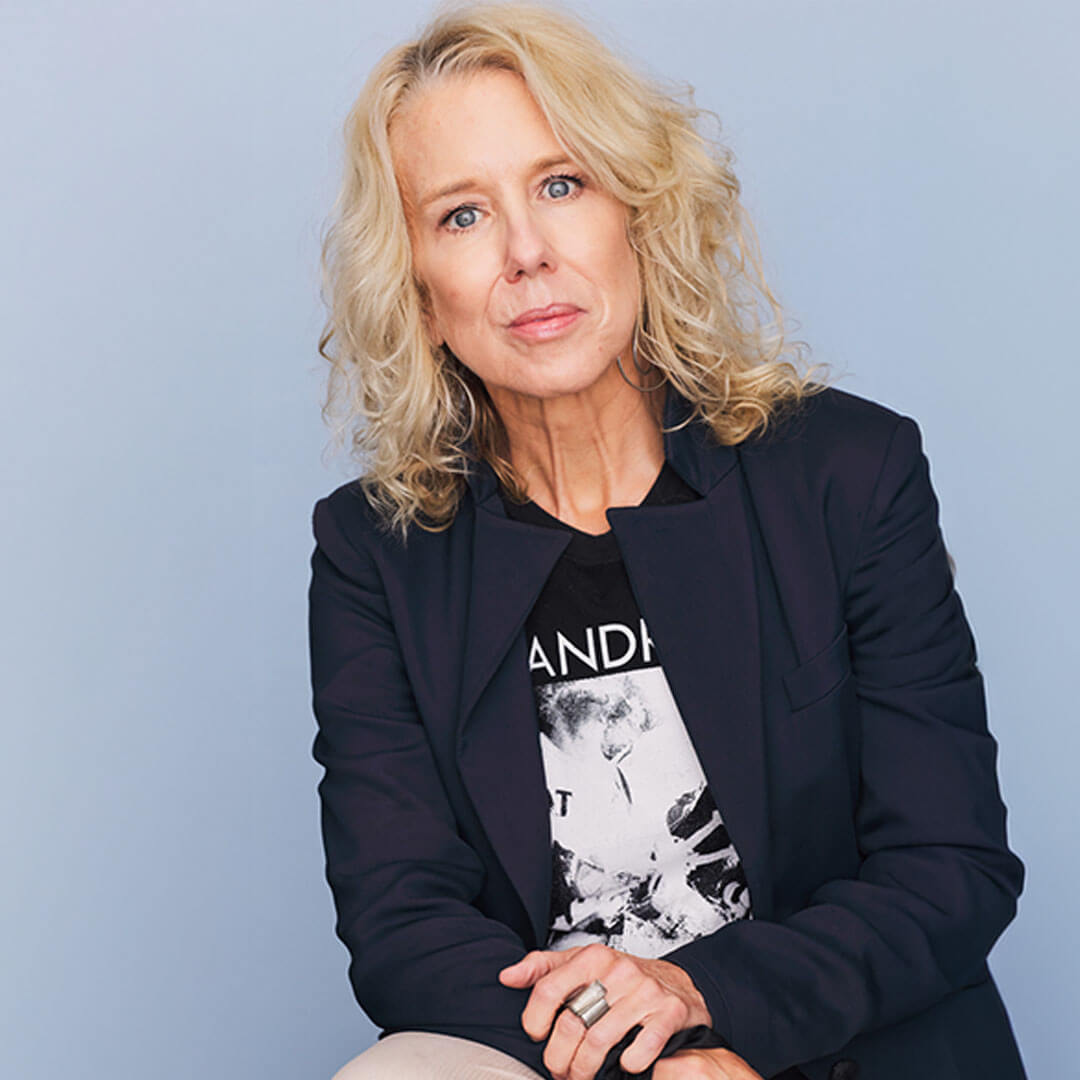
And I am Dr. Katy Peters, and this is the Brain & Life Podcast.
Dr. Correa:
Saludos and welcome back. There has been so much discussion recently and over the years in the news and online about optimizing our health and especially brain health. Sometimes this centers around ads and a variety of supplements, things to eat or not to eat, all kinds of devices and equipment for the home to wear in and out, whether it's glasses and red lights and all kinds of things. I mean, Katy, how are you interpreting some of this, both for your patients, but also yourself and your family?
Dr. Peters:
I know. There's so much out there and it comes to you from so many different directions, whether you're reading about it or a friend is using something and says, "Oh, I use this." It could be family or friends, I feel like that's a common source. But supplements are a very, very, very common question in my clinic. I would say we actually did a survey of over 900 of our patients and they used and just asked, "What else are you doing, just sort of considered complimentary alternative to standard therapy?" And what we found is that most of our patients were doing something and the most common thing was either taking a multivitamin or praying for one's own health. So we even went as far as talking about really globally what we see.
I think it's important because supplements particularly can have interactions with medications. If you're on a clinical trial, for you, anti-seizure medicines are notorious for having interactions. And really any, quote unquote, traditional medicine is going to have that. Now we're lucky. We have a pharmacist that's amazing. She's actually embedded in our clinic. She sits right next to me every day I have clinic, which is wonderful. And she will often just scour the list of supplements that our patients are using. But on the flip side, I'm pretty quick to recommend sort of complimentary things such as sleep, exercise of our body, exercise of our mind. I recommend it for my patients and also for myself.
Dr. Correa:
I think this is opening up such a wide scope of places where I think we can get into even more conversation in future episodes. But I want to know from our community, what supplements and/or other things are they wondering about? Is it safe, is it not? We know, as you mentioned, some supplements that can have interactions with some key medications for a variety of neurologic conditions. There are some supplements that, if they're taken at too high of doses and you're really not deficient in it, can actually be toxic or have significant complications. And some that actually can disrupt hormones. So there's so many places, I think, for us to address and discuss further and how they impact specific conditions or the questions our listeners has. So let us know ones that you're interested in as we work towards a future episode to address some of these concerns, and take a look at the website and its resources that we have to talk about some of the specifics in your conditions.
Now, of course, I'm keeping up and working to monitor the studies that are evaluating possible supplements and interventions that can be a benefit towards our cognition and help, and we want to be reviewing some of that with you. But a lot of it really consistently is tailored towards your own medical needs, your medical history. So checking in with your doctors and checking the levels of certain things that might impact the symptoms you're having, whether it's a neuropathy, whether it's medications you're taking for epilepsy and there's some supplements that you need in addition for that, whether it's a certain intervention that you're getting. I know after or during chemotherapy, there's certain things people should be following and making sure they're getting sufficient supplementation of.
And so based off of your needs, there won't always necessarily be blanket recommendations that we tell everybody, "Have this many milligrams," or, "This many tabs," or, "Gummies of a certain multivitamin," or otherwise. But we know that there are steps that we can work on together. And like you said, focusing on where are the places you can start personally and as your family, starting to work to improve your bedtime routines, your wind downs, the time that you've set aside for sleep, the time you're working towards setting aside time for your diet. Both, whether that's the grocery shopping to make sure it's very intentional and you're getting high quality whole foods, or whether it's the time you're taking the set aside for a little bit of exercise and movement within your abilities.
And then the time that you take to set and follow up with your doctors. But we want to hear more questions in this space and continue to build more episodes, but a lot of these go to cognitive impacts. And the challenge of cognitive impacts of different neurologic conditions often comes up as questions to us after a stroke, brain surgeries, neoplastic processes or tumors, a heart surgery that affects blood flow to the brain and many other illnesses or injuries to the brain. And the focus on cognition and the changes along with brain fog that has come up in many discussions and what that means and how the attention that has been spent on it has skyrocketed over the last decade as we're talking more about dementias and then the COVID era.
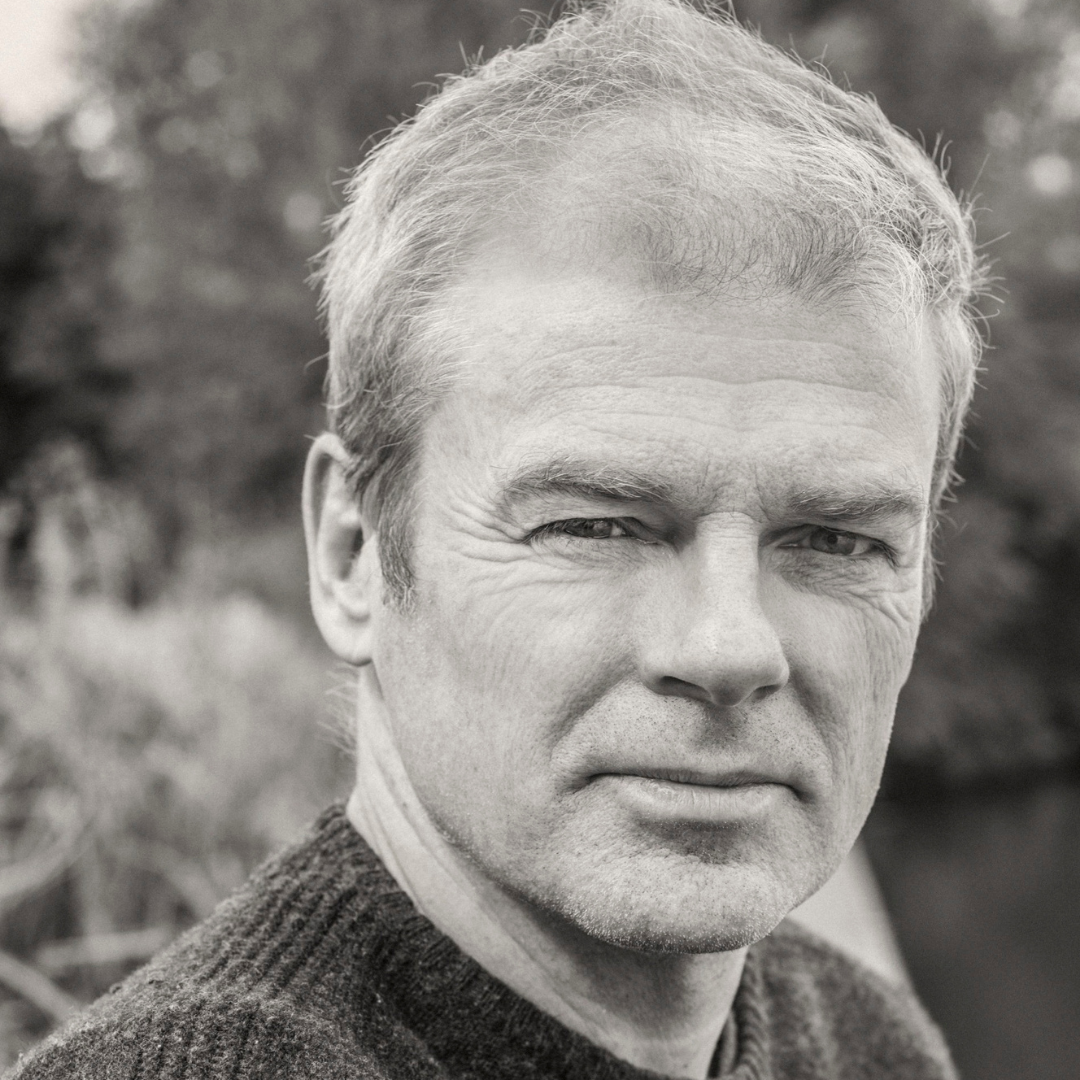
So in today's episode, we will hear from author Mark Haddon about his own experience with cognitive challenges and changes after a heart procedure and then changes that occurred after COVID illness. Then we'll continue that discussion with Dr. Jacqueline Becker, a neuropsychologist who has helped evaluate and support many patients through similar challenges. We hope you enjoyed this episode. Welcome back to the Brain & Life Podcast, we're so glad you're joining us today. And today, I'm joined by a guest from across the pond. We're joined by Mark Haddon, an award-winning novelist and a children's author, playwright, poet, illustrator, visual artist, a whole variety of arts, it's amazing, who's written books and include The Curious Incident of the Dog in the Night-Time, The Porpoise, Dogs and Monsters, and an illustrated memoir, Leaving Home: A Memoir in Full Color.
In 2019 though, Mark underwent a triple heart bypass surgery. And although his recovery moved forward well, he experienced significant and persistent brain fog that affected his attention, his memory, reading and writing. And then after beginning to improve, that thing we all experienced, COVID came and he developed his own experience of Long COVID following a second COVID infection. Once again, disrupting his recovery, his physical stamina and cognitive abilities. He has shared in his writings candidly about what it has meant for him to lose access to language and concentration and so many of the key aspects about his identity and purpose, while also describing unexpected ways that other arts have helped him along with volunteering and his family reconnect as he has moved forward. Mark, thank you so much for joining us here on the podcast.
Mark Haddon:
It's good to be here with you.
Dr. Correa:
I wanted to go back. Help us get to know you and yourself, your passions and identity before 2019.
Mark Haddon:
They haven't changed a great deal. I've always been... I suppose to make sense of me, I go back to being the sort of slightly nerdy outsider child that I was. I just didn't feel at home in myself with other people. Adult men seemed sort of like grotesque dinosaurs and the boys around me always seemed too rough and terrifying. I remember crying on my first night at Boy Scouts and being taken home by my mother. That was quite indicative of the kid I was. I think secretly, a huge disappointment, my extremely butch rugby playing, athletic father. I was set out on a slightly different route. But in contrast to that rather timid person, there was another person in there who is sort of, I would say, a natural anarchist. My father had very, very little education, was a self-made man, became quite a successful architect and quite well off.
He, I think, wanted to turn back time and go to boarding school himself. As an entree to that world of people who used subclauses and had huge bookcases and talked in several languages, he couldn't do that, so he sent me to boarding school instead. It was a horrible place, I greatly disliked it. And I always say, correctly I think, that one of the things it has taught me more than anything else is that I don't want to do what anyone else tells me to do. I have a great deal of trouble belonging to any kind of group. I think I would have been one of the few people who refused to press any buttons for Stanley Milgram. Even if it was delivering an ice cream donut to the person on the other side of the window, I just do not like being told what to do.
Dr. Correa:
How did that change, that job that you took on as being a father yourself, one that you didn't necessarily get to choose about automatically being in that role?
Mark Haddon:
That's fine. I think family doesn't feel like the same kind of belonging. The great thing, obviously it's not true, if it's not your biological children, then you have to deal with the downside of other people's genes. But I think all parents would say that the things that drive you up the wall about your own children are not a million miles away from yourself or the person you love.
Dr. Correa:
True.
Mark Haddon:
Just to go back a little bit, I think one of the reasons I fell into writing and the arts in general was that I was constitutionally incapable of doing what we might call a normal job. Turning up at the same place every day, five days a week, and being told what to do by someone else, I simply cannot bring myself to do it. So in a way, I burnt all my bridges. Arts was the unburnt bridge that I crossed in the end. I needed to work for myself. And I've always spent a lot of time in my own head and reading and writing, a part of that powerful interior life.
Dr. Correa:
One of the things that you've shared about your early experience with your different medical challenges is more recently, running has actually been a very popular increasing number of sport, but didn't always used to be the most. And it was an area that you stayed active with your physical activity and were an active runner. And I think it was one of the places you first started to notice that something was going on that had changed for you. What were you experiencing and how quickly did your life change once the problem started to become clear that might be related to your heart?
Mark Haddon:
I'm a very specific kind of runner, I'm a solitary runner. I am not Mr. Park Run. I think we have park runs in the States, is that right? The great-
Dr. Correa:
Yes.
Mark Haddon:
[inaudible 00:11:54] in a park on Sunday morning, not for me. Running for me, I'd say it's a profound borderline spiritual experience, but I have to be in green spaces, away from other people. I need water, I need trees, I need nature. And despite the fact that I'm completely the wrong shape, I'm far too wide and small and heavy, I've always enjoyed running long distances. And I noticed that it was getting harder. And it was getting harder at a speed which couldn't be accounted for by the fact that I was just getting older. And I think, I mean, I discussed this with my doctor. I think there are pains and discomforts that people take to the doctor. And depending on whether they're a sports person or not, you have to interpret them in a slightly different way. I mean, I'm one of those people who enjoys suffering when I'm out running.
There's something about connecting to your inner animal. When it hurts, it feels sort of noble in a way that is inexplicable to some people when I try to explain it to them. So when you go to the doctor and you say, "I think there's something wrong," it really does mean something. And I was told it would probably sort itself out, by one doctor, but because I'm a pushy, educated, White, middle class person who expects better, I went to another GP in the NHS over here. It was great, I could switch to someone else. A GP who's since become a friend. And he finally sent me for a battery of tests. We found that I had very narrowed cardiac arteries. And that explained why I was having a problem. So in a way, the running saved my life. If I hadn't been a runner, those arteries may have narrowed and narrowed and narrowed until I just fell over in the supermarket and it was Goodnight, Vienna.
Dr. Correa:
And at that stage, you'd not had any change that you had noticed either neurologically or cognitively in any way?
Mark Haddon:
The rest of the time, absolutely no. And in fact, indeed, my physical symptoms were atypical. I had, I think they referred to it as atypical angina. I think there's a gender split. I think women tend to get atypical angina, not get the chest pain. Men tend to get the chest pain and the radiating pain down the arms. So I had female angina, if you want to put it that way, which of course, is much more dangerous. It gets dismissed much more easily by doctors and is therefore much more dangerous.
Dr. Correa:
And then once you did have, it was identified, you had a bypass surgery, your physical recovery after the surgery in many ways appeared to progress well, but you started to notice there were cognitive differences in your recovery. What were the issues that you first realized in terms of memory, concentration, reading or writing or any of that changing?
Mark Haddon:
Everything was foggy, everything was slowed down. And the odd thing was how out of sync it was to my physical recovery. I mean, I was able to sort of gently jog and cycle within six weeks. The surgeons describe it as plumbing and they're perfectly happy with that. But when you tell the nurses and the physios that's what they're doing, they scream and tell you to slow down. But I didn't feel the need to slow down, but my brain had slowed down. It's a recognized event after you've had either major invasive surgery or indeed, chemo. I think chemo has a very similar effect. What causes it? No doctors know. And in fact, if you talk to people in the surgical world, they all blame each other. It's blamed on the transfusion by some people, it's blamed...
The people operating the transfusion say it's caused by tiny bits of bone left there by the surgeon when he grinds his way through your sternum. In truth, no one really knows. The only person who said something which made a great deal of sense was my GP, who said that he has found that among his patients, there's what he calls a magic year. He says there's no scientific basis for it whatsoever. But a lot of his patients who've had major surgery or chemo experienced that fog for about a year. And he was pretty much right. At the end of the year, it seemed to lift. And my brain was briefly returned to me and I could read and write and think in the way I remembered from before.
Dr. Correa:
And for that phase, did you do any therapy to help you cognitively, or occupational therapy?
Mark Haddon:
No, I didn't. I mean, it's offered. And in fact, over here, you will be offered CBT after heart surgery of any kind. Having talked to a lot of the mostly men in rehab, because I did do some of the physical rehab classes, although they were quite low level, I realized that a lot of men in particular who had bypass surgery had got into their 50s and 60s and never really thought about the fact they had a body which might go wrong. As opposed to a sort of slightly pessimistic arts person myself, who thinks about death on an almost daily basis, it came as a massive shock to them they might be mortal.
And then the machine that was carrying their brain around could break down, possibly permanently. And I think those people do need CBT, but it's less about the brain fog and the heart than it's coming to terms with the fact that they are in fact, a human being. I spoke to one man at one of those rehab clinics who was amazed to realize that he could feel his own pulse. It astonished me that a man could get to 60 years old and not sit still in a room and hear his own heart beating. But he was quite typical, I think.
Dr. Correa:
Yeah. I think there are many people who don't really necessarily think of the fragility of our bodies, but many of us and our listeners are acutely aware of that, either for ourselves or for those around us that we love.
Mark Haddon:
Yeah.
Dr. Correa:
One of the things you described in terms of having a sense of your experience of brain fog is as you were walking around, feeling almost drugged and very dissociated from your space, being unable to remember familiar information or follow words on a page when you were reading. For someone who has never experienced brain fog from one of its variety of causes, how would you actually describe it to someone at a cocktail party, now having kind of come to a clear perspective?
Mark Haddon:
I think the best way of talking about that is to fast-forward to talk about when I got the fog as a result of Long COVID, if that is the reason why I got it. And irrespective of what Long COVID might or might not be. And when I talk about this in the memoir, the best metaphor I ever heard was from a surgical friend of mine, himself a surgeon, and a friend of his had had chemo. And she said that inside her mind, there used to be a dining table. And she could see the whole dining table and she could arrange many objects on the dining table. She knew what they all were, she could move them all around in relation to one another. And after she had chemo, the table shrunk to a tiny kind of bedside table. She could only put three things on it. If she put a new thing on it, one of the objects fell off the back and she forgot what it was.
And that has captured it more clearly than anything else that I've heard. If you want to be technical about it, it was my operating memory. I could hold very few things in my mind's eye at one time. My memory was a little slow. Everything else was a little slow, but it was that, it was the operating memory. It was the mind's eye, which felt hugely reduced. And one of the reasons I found that particularly irksome, I mean, it was sort of morally irksome because I'd rather smugly always said to myself, "I'm a writer. All these are the things that as you age, stop people doing their jobs, your knees might no longer work, you lose all your hair, you're using a walking frame, but you can still write." Of course, the same thing can happen to your brain. And your brain can suffer in the same way that other parts of your body suffer.
So that felt like a slight moral injury. It taught me not to be so smug about my mental capabilities. I also realized that if I were doing almost any other job, I would have been able to do it. If I've been a garage mechanic or I think a dentist, whatever, there is something about writing which fundamentally needs a large processing memory. You need to be able to hold a large number of variables, as it were, in the air at the same time and move them around and see what their effects on each other are.
I mean, there's a famous quote from Kurt Vonnegut about the fact that you can..." Writing is a bit like driving through fog with the fog lights on. You can't see very far, but you can make the whole journey that way." What he doesn't say is that it's also a really good way of driving off a cliff. If you can write like that, good for you. But for me and for most writers, you want to have a sense of how changing a few words here affects the end of the paragraph, the end of the page, the end of the entire book. And if you're driving through fog, you simply can't do that.
Dr. Correa:
Yeah. I mean, when I read that small table analogy of the reduced mental workspace, I thought it was perfect and a very clear description. And many of these challenges that you've experienced and many other people experience are invisible impairments. Do you ever feel the pressure that yourself or from others, to demonstrate that you really feel unwell?
Mark Haddon:
Well, here's the double irony. You're absolutely right, it is invisible. You haven't got a cast around your leg or something to show people and elicit the sympathy we'd quite like, so it's invisible. But the other paradox is that if you get a sufficient adrenaline rush, you get over it for that time. If I do a public event, what actors call Dr. Stage comes into play. As soon as you're on stage, so many medical problems just sort themselves out for as long as you're on stage. And then Dr. Stage goes home as soon as you step into the wings again at the end. And for example, I volunteer as a listener on the phone for Samaritans in the UK, an organization which, we listen to people in distress, particularly concentrating on people who have suicidal thoughts and feelings and actions. And for that three and three quarter hour shift on the phone, I never felt the fog.
And in fact, at the end of a shift, I would think, "I'm great." But in the sort of 20 minutes it took me to drive home, the fog would come down again. I had a very interesting experience recently. I did an interview on stage in London with a very good friend of mine, Dr. Rachel Clark, a wonderful writer herself. She won the Women's Prize for Nonfiction last year. We sat on a stage and I could feel that my memory wasn't working. I couldn't pull up words as quickly as I wanted to. And it suddenly occurred to me, it was because it was Rachel and it felt like sitting in her kitchen. It didn't feel like feeling on stage. And that itself gave me a little jolt. And suddenly I was able to access those words and those memories. It was very interesting to see the adrenaline kick in, in real time.
Dr. Correa:
So interesting, yeah, to think of it in different settings and whether the stress level or some kind of cue is what helps you or just drives enough focus. I imagine though, it probably also exhausts some of the reserve that you have to go into other activities in the rest of the day. As you noted, just driving home, you already start to notice the symptoms come back.
Mark Haddon:
One of the ironies is that it doesn't help your self-image much. If you know that as simple a thing as a kick of adrenaline can clear it, you think, "Why in God's name can I not do that? Why can't I replicate that all the time at home?" I almost feel like if there were sort of a lion on a chain at the end of the room, I might be able to work if I could keep the fear going. But of course with adrenaline, it's like taking out a bank loan, isn't it? You can take out a certain amount, but it needs paying back. And the other irony is that for me, and I suspect this is true of many writers, what you need is a mental clarity at the same time as a kind of calm. You need to let your mind drift.
I mean, I resolve a lot of the problems I have with writing when I'm out for a walk or particularly late at night, sort of sitting in bed, relaxing. It's almost like there are too many... If I'm thinking too hard, everything is nailed down too tightly in my mind. But walking or sitting in bed, being on the verge of sleep, loosens everything up. And somehow that Rubik's cube inside my head then starts to sort of twist more easily and smoothly and things resolve. Of course, you can't get into that state of mind when you're feeling stressed and you're full of adrenaline. So I was looking at this paradoxical state of mind, which I used to have and used to come very easily to me, but which had gone.
Dr. Correa:
Yeah. I wanted to ask some more about kind of that idea of loosening things up. One of the things you write about was trying small writing exercises, almost kind of a mental physiotherapy, but they eventually were a bit discouraging. But what did you learn about the difference between gently exercising or mentally exercising an ability and pushing yourself in a way that just led to more frustration or worsened symptoms?
Mark Haddon:
I know this is not what one is meant to say, but I just decided it was a bad idea. It's not like graded exercise where you can sort of, instead of the two hour, run you remember, you can just go on a half hour walk. I mean, I understand the logic in that. But if you're going to write a page, then you need to be in a decent state of mind to get the first few words right. There's no equivalent of the sort of 15 minute walk when it comes to writing a short story or just writing a page. Somehow you write well because you're aware of where it's going. You lay down the seeds of something bigger. And then when you read it back, it feels like a seed is there on the page. If that doesn't happen, you read it back and you think, "This is flat and empty," and that's doubly disparaging. And that's one of the reasons why I turned far more to visual arts.
Because one of the strange things about my experience was that pictures were not affected in the same way. I mean, I make a lot of sculpture, for example. And with that small table in my head, when I'm falling asleep at night or when I'm out for a walk, and this may be because my father's an architect and I've learned expectations from him and maybe some genetic module as well, I'm very good at imagining three-dimensional objects. So it was intensely pleasurable to make things in my mind's eye, as it were. Shape them, turn them, rotate them, change them, edit them. Because your mind's eye, you can hold one object and you can operate on that one object. You don't have to think months, years, pages ahead of you, you can just do the thing. And then I would be able to build those things. And that gave me a way of feeling creative and feeling that I was making something and putting it out in the world.
Dr. Correa:
Yeah. I wonder if that extends more to those kinds of hobbies, things that we explore with curiosity and just a sense of enjoyment. And that the things that are our own kind of most specialized skills, in your case, writing, might be the ones that are most demoralizing, that try to just keep hammering it. But I could see someone who maybe they themselves is a fine visual artist or that's the skill that they have super honed that then when they're having a challenge, just trying to go to that and even doing a small amount will always feel flat to them.
And I mean, I think it's a space where we don't know. And I think people of different skills would have to say, I think many of us could enjoy and explore song and movement in other places, but if it's the skill you are so used to being an expert at or being aware of all the little nuances, it can probably be very demoralizing when you have some reduction in that capacity.
Mark Haddon:
But I also think that different arts are structured differently when it comes to making them. The way your brain approaches them, is it something where things happen in real time, like music, for example? Or is it like painting or sculpture where there's no time element? You can take your time, you can do it slowly. Those things are fundamentally different to the process of making those arts, I think. But often you don't notice these things until you run up against a big hurdle. And then you think, "Oh, now I suddenly see why these two things are very different," making pictures and using words, for example.
Dr. Correa:
And you were sharing with us about your volunteer work and listening closely to others in distress and how you found that fog temporarily lift in that situation. But what else do you think you learned from those hours of focusing in on another person's situation and teaching you about your own attention, your own purpose, identity and your abilities?
Mark Haddon:
Ooh, how long have you got? In fact, I do talk about this for a long time because I mentor New Samaritans in the branch now, who've gone through training. I And I help them get onto the phones and start actively listening themselves. I've learned just to pick a few really important things. Most of the time we're really bad at listening in the rest of our lives. Nearly everything we say to people in our lives who are in distress is in effect, "I feel uncomfortable with this. Let's change the subject." Every time we say, "I'm sure things will be better tomorrow," or, "Oh, something similar happened to me," or, "Look on the bright side," we're just pushing that person away because we feel very uncomfortable with it.
And there's a crossover here with writing in the sense that I've learned how important it is to steer into distress, as we call it, in Samaritans. Find out where the really difficult stuff is and do the thing that we almost never do on a daily basis, which is say, "Hang on, tell me more about that." And I think there's a general principle in there, which I found really, really useful in life. Stick with the dark stuff and ask a question and be interested. I tend to think now that being interested in asking questions is the solution to so many seemingly insoluble problems in life. Whether it's coping with your own teenage children or trying to break up a fight in the street, just stopping and saying... Just being curious, saying, "I'm interested in what's happening here. Just tell me more." You put yourself to... In fact, this is another link with writing, I think it's really important.
I teach creative writing as well. A lot of people come into creative writing with the thought that's a kind of a therapy there. It's sort of getting stuff out of your head or out of your chest onto the paper. And I say that's a decent way to start. You'll never learn to really write well until you realize that the reader really doesn't give a damn about your own personal feelings. What they want is an arrangement of words on the page that will deeply move them, make them laugh, make them cry, whatever. And to be able to do that, you have to take yourself out of it. You have to put yourself to one side, which is of course, paradoxically why some profoundly moving, empathetic novels are written by the most appalling people, which always strikes me as astonishing, but it's nevertheless true.
And I think the same is true in conversation. If you put to one side what you need from a conversation and you stop trying to fill the silences and you don't react by saying, "That makes me feel X," if you just put your own feelings to one side and say, "That's really interesting, tell me more." I mean, just to go to the biggest distress that we encounter regularly in Samaritans is people having suicidal thoughts. In normal life, if someone talks about their suicidal thoughts to almost anyone in their life, that person will do something to try and change the subject or make the person look on the bright side. It's a revelation to be able to say to someone, "Tell me more. How did you get to this place?" And to dig in as well, to say, "What do you mean by suicidal thoughts? Is it just feelings? Have you got a plan," for example? "Have you got a date?"
Another interesting question to ask people is, "You want to die, or do you just see no other way out to what feels like an intolerable situation?" And that's fascinating for several reasons. A, the number of people who are relieved that someone's willing to just listen to that kind of stuff, because it's our bread and butter. That itself, I think, alleviates a lot of pressure for a lot of people. Also, on a level of pure human curiosity, because I do find people fascinating, is to realize that suicidality, which I used to think of as a sort of a slightly binary yes/no thing that happened to people, is a whole wild, strange country in itself. Both in terms of the thoughts that people have in their minds, the addictive behaviors they have, the dangerous activities that people will engage in when they value themselves very, very badly and at a very low level, which result in what looks to the outside like suicidal behavior.
Dr. Correa:
I imagine that experience of just deeply listening and digging in for more has changed your own communication in your household and with your partner and those around you that you love. What are some of the ways that it's cued you to ask others to dig into what you're thinking about or when you need more of a cue, or what you've learned also to pursue in communication with your family?
Mark Haddon:
My partner and I have always got on very well. In fact, ironically, because I wasn't... I came from a very non-talky household, let's put it that way. The main thing she taught me was how to bicker and how bickering is important in real life. Having a low level argument about stuff, I used to find that very hard. I don't think we really needed much. It's really helped me with teenage kids, especially when teenage kids are going through a hard time. That's often difficult as a parent. And I've learned to just sit with the horrible stuff, listen to the horrible stuff. Say, "Bring it to me. I'm fascinated, I'm interested." It also works really well with friends. I think almost everyone I know at Samaritans has found that as they get into the habit of this slightly alien way of listening, they don't feel the same urge to fill silences, to give their own opinion.
People just tell you more. I mean, I think a lot of interviewers and possibly interrogators will tell you the fundamental truth, that people have an urge to speak and they don't like silence. If you shut up, people will talk. The only downside is that sometimes, because I get into the habit of just not being judgmental about things, never leaping to a conclusion, you'll listen to a friend who sort of, I don't know, whose husband has left them and you're nodding and listening and asking questions. Then you realize you're meant to be a normal friend, not a Samaritan. You have to come in with a savage judgment about their ex's shortcomings. But apart from that, it makes life better in so many ways.
Dr. Correa:
And after all these experiences, both your own experiences with health challenges, both cognitive, neurologic and otherwise, and then being there alongside others who are navigating their own challenges, what does brain health as a broader concept mean to you now? And what are some of the most important things you're doing day to day to take care for your own and your family's brain health?
Mark Haddon:
I'm a little nervous about, especially this will be on the internet, that great jungle of complete nonsense and faux wisdom, handing out a little bit of my own and adding it to the mix. Everyone's very different, aren't they? And all the things we should all do, I suspect that most of us know already. Eat well, sleep well, get some exercise, reduce the stress in your life if you possibly can. And I do all those things.
Dr. Correa:
But the challenge is always really the practicality of how you are doing it in your life.
Mark Haddon:
Yes. And yes, it's like losing weight, isn't it? In the pre-Ozempic days, everyone knew how to lose weight, that wasn't the problem. We pretended it was the problem. But the problem is how do you... The problem is willpower, timetabling. And often it's a sort of economic political problem, isn't it? We're so in the habit these days of... And governments and institutions really like the idea that people are responsible for their own health, when the real problem is where are the shops with good food? Where are the cycle lanes? Why do you have to drive everywhere? We could really increase the brain health and the mental health of so many people, not by forcing them to change their behavior, by providing parks and public transport and better, easy access healthcare. So I think it's often a political question, not just a personal question.
Dr. Correa:
Absolutely agree.
Mark Haddon:
I am one of the world's experts in placebo effect. So to get over Long COVID, I have tried almost everything. I was in touch with Anil Seth, the neuroscientist a while ago because he suffered from Long COVID, may still do. He sent me his daily protocol for what he takes in the morning. And I though, "I am going nowhere near that." He doesn't really have breakfast cereal. He has a small multicolor pyramid of pills and potions and herbs. And I thought, "I simply cannot face that." But all the more sensible things, I've tried in one way or another.
And extraordinarily, I've tried a rather eccentric one recently. And for the first time in a very, very long time, I'm properly running again and writing 500 or 1,000 words a day. I'm not going to say what it is because it's slightly bonkers and I don't want everyone to leap on the bandwagon. I will go public with it if it's still working in two months time, because I know how powerful the placebo effect is. But if it is the placebo effect, I'm surfing that wave as far as I can.
Dr. Correa:
Well, aside from the extreme, if there was one thing you would tell someone or share with someone out there who's experiencing persistent brain fog after an illness or a major medical procedure, what would you tell them?
Mark Haddon:
What I've learned really, and again, I'm going to push back a little bit because I'm very wary of generalizations in these cases, especially when it comes to mental health. And we all know that even something as every day as SSRIs, for example, they affect people so differently. A psychiatrist friend of mine said to me, "They work on the whole, but it's a bit like throwing a spanner into the engine and hoping it stops the right wheel." What I will say, and I do say to writers, so I feel I can talk for people who have the same peculiar job that I have, is that, and I've said this in a different form to students over the years, whatever mental restrictions you have, there are always ways around it.
Writing covers everything from the 10 volume novel to the haiku. There must be a way that you can write, given your restrictions. And paradoxically, when I'm teaching writing, a lot of my exercise is about placing restrictions on people and showing them that very often restrictions are the creator of new ways of thinking. Of course, anyone who's a teacher knows this, that it takes so long for you to take your own advice. It took me a very long time with Long COVID to take my own advice.
And one of the reasons that Leaving Home, the illustrated memoir came about, was me finally taking my own advice and saying, "I have trouble pulling down wonderful new ideas out of the ether. So let's take my own life. Let's use all the photographs, drawings, paintings, prints, whatever I've gathered over the years and see which ones of those are useful. And instead of trying to write a long arc, as it were, sort of built like a bridge across that table in the mind's eye, I will just write in very, very tiny, simple chunks. Nearly all of them under a page long. And let's not think too much about overarching structure."
And two wonderful things happen. One, without me thinking about it, the structure sorted itself out. Again, it's something I often say to students. Stop wasting time thinking about really big questions. Deal with the little problems. And if you're lucky, there's often a thing at the back of your brain which will solve the bigger problems for you. And so it was in this case. The other irony was, and this is always a problem with writing about yourself, with writing about memoir, there's a bit too much emotion involved.
It can get a little bit too sentimental, it can get a little bit too opinionated. You find yourself wanting to grind axes and that's never helpful in front of a reader. But that concision, chopping things down as much as I could, turned out to be the perfect recipe for cutting out sentimentality. So what started out as me taking my own advice about just getting around the mental blocks I had in front of me, solved other bigger problems that I wasn't even initially thinking about. So advice to writers, but no one else. I honestly don't think you can do dentistry or garage mechanics using the same principles, but...
Dr. Correa:
Not necessarily, but people can think about maybe how that fits into their own lives. But Mark, thank you so much for really opening up your story, your experiences, sharing them with our listeners, and just listening carefully and opening your time to those in need.
Mark Haddon:
You're very welcome. It was good to be with you.
Dr. Correa:
On the Brain & Life Podcast and online, we share stories from people living with neurologic conditions and the science that helps them navigate everyday life. Behind that progress are researchers working on ideas that could lead to better treatments, better understanding and better care.
Dr. Peters:
The AAN Research Program has supported this kind of work for more than 30 years, but each year, far more researchers apply for funding than we're able to support.
Dr. Correa:
So if you're someone who values neuroscience that makes a real difference for patients and families and all of our communities, we invite you to join this effort. A donation to the AAN Research Program helps more promising research move forward. Learn more about this at aan.com/donate. Thank you so much for sticking with us here at the Brain & Life Podcast. And I really appreciate Mark's discussion and openness about his experiences with his cognitive changes after a variety of medical situations. And joining us now is Dr. Jacqueline Becker, a clinical neuropsychologist and researcher at the Icahn School of Medicine at Mount Sinai Hospital here in New York City.
Dr. Becker's work focuses on cognition and how it fits in with chronic medical illnesses with a particular experience with Long COVID and the cognitive symptoms that come after it. As a neuropsychologist, Dr. Becker helps patients, other doctors and clinicians understand how changes in attention, memory, processing speed of our brain and language, along with executive function might impact your daily life, relationships and the recovery of the medical conditions or injuries that you've experienced. Her research helps define the cognitive profile for people recovering from COVID-19 and has contributed to the growing evidence of the cognitive symptoms that we're coming to better understand. Jacqueline, thank you so much for joining us here on the Brain & Life Podcast.
Dr. Becker:
My pleasure, thank you for having me.
Dr. Correa:
I wanted to start there. We've had one other episode talking some with a neuropsychologist, but how do you explain to patients and families why they're seeing you, your role alongside the other clinical team members?
Dr. Becker:
Yeah. I like to explain neuropsychology as being more than just the punchline of brain behavior relationships. But I think of cognition as being measurable in terms of what the brain is able to do under ideal conditions in a distraction-free setting. So what we're really getting at is cognitive capacity. And I think cognitive symptoms, we think of as sort of being the tip of the iceberg and what lies underneath that are sort of the underlying mechanisms that are causing those cognitive changes.
And so I think neuropsychological evaluation is essentially understanding what the lived experience of those cognitive symptoms are so that we can better get at what might be causing them and sort of go through differential diagnosis, which just means we're trying to think of other potentially reversible causes to cognitive dysfunction and trying to figure out and narrow down what might be going on. That's kind of why patients come to see me. And what we do is we do a series of tests that look at all different cognitive domains because really, we know the brain is a network and no one domain works in isolation.
Dr. Correa:
And Mark described for us really profound cognitive changes and challenges that he had after a bypass surgery, including difficulty reading and writing, concentrating and holding ideas in his head. All, we can imagine, are incredible quality of life changes when it comes for an author. And many people have heard the term he described as this broader concept of pump brain, so what does that term mean historically and how do we think about it today?
Dr. Becker:
Yeah. Years ago, people noticed that some people had some trouble with thinking skills, with cognition, with memory after bypass surgery. Many assumed that sort of, it was because of the bypass machine itself. And that's where the term pump brain sort of came from. But the story, we know now, is much more complicated. This machine may play a role in some cases, but it's really a piece of a larger puzzle. And the research really suggests that first of all, people who have bypass surgery already have certain risk factors that can affect the brain.
They may already have high blood pressure, vascular disease, et cetera. And so then the stress of a major operation can cause inflammation. There are medications, there's disrupted sleep from a hospital stay, sometimes things like delirium. And so it's easy to see why the brain may struggle and need more time to recover. And we see this not just with bypass, we see it with other surgeries, we see it in patients who stay in the ICU. It's actually called Post-Intensive Care Syndrome or PICS. That's sort of how we understand it now.
Dr. Correa:
Yeah, it seems that in these situations, it's much more all the different factors. Not just the fact that someone went on this bypass pump, but what's the status of their arteries in their heart and in their brain and all the other medical situations? And then all the other challenges of what that hospital stay meant for that person. Now, can you help our listeners catch up on some of what we know now about how people can recover and return when they're having some long-term cognitive changes after a coronary bypass surgery or another heart procedure?
Dr. Becker:
Yeah. I think the brain recovers alongside the rest of the body. People talk about mind/body, but it's really just one system and it works together. So after any major illness or surgery, it's not unusual to feel some of the cognitive effects of that, so to feel a little bit slower, more forgetful, even more easily overwhelmed. And for many of those people, symptoms do improve over time. I would say if they're persistent or getting worse, then they do deserve some attention, in which case a neuropsychological evaluation can be helpful.
For a lot of people who are going to undergo major surgery, we sometimes recommend they establish sort of a baseline before surgery so that we can track any changes over time. But really, the sort of general guidelines is within about six months, if you're not really feeling quite back to your baseline, to probably get an evaluation. And then there are some supportive therapies that we can do as well, like cognitive rehabilitation, which can be helpful in many cases.
Dr. Correa:
Something you were talking about in your kind of introduction of what the neuropsychologist does and the testing, you particularly highlighted a stress-free, distraction-free setting. And then you were also talking now about maybe this idea of having some baseline, but how do we put that baseline and then the testing that we have as a reference point after someone starts to have symptoms in the context that, as you said, these are stress-free, distraction-free settings, but life doesn't always work out that way?
Dr. Becker:
Absolutely, yeah. And so I get this question all the time when someone comes in, say, after having had an illness, maybe they're scoring in the, quote unquote, average range, but they feel like they are different from their baseline and we don't have a baseline assessment. And so what we do is we use a measure. It's usually a single word reading measure, but we have some that are nonverbal also, that estimate what we call pre-morbidability, so it sort of estimates someone's baseline. And then we use that as a marker for where someone should be performing. And then we look at their test scores and see how far from that point have they deviated. And so our tests are normally distributed, which means that they fall on a bell curve.
If you can imagine just a curve that looks like a bell and straight in the middle is where average is. Well, some people who are sort of in that average range and they are scoring a bit below average, we might say they've taken a hit, they are now below average. But someone who started in the high average or superior range and falls about one standard deviation below that, they're now performing squarely in the average range, but for them it represents a decline. So we always think of scores in both of those ways, so relative to how someone should be doing for relative to their age and education and relative to their presumed baseline.
That's how we sort of make that comparison. And yes, we do it in a distraction-free setting, which allows us to see what the brain can do. So there's no stress in the room, we're able to really see how far this person can go in terms of their cognitive capacity. In the real world, it's not like that at all. And so what we can do is see, "Well, where are their strengths and weaknesses in this distraction-free setting? And how can we use those strengths and leverage those strengths to help them compensate for the weaknesses that we saw in testing?"
Dr. Correa:
And one of the other things... I think that actually, I was just remembering and thinking a lot of that ties back to some of the ways that Mark has been working on adapting to the challenges and identifying when he's having a difficulty and then trying to use strengths in certain ways to help him bridge when he's having a challenge. And he also described having brain fog after a COVID-19 illness and some Long COVID symptoms. So when someone says they have brain fog and/or we're talking within the context of COVID-19, what are some of the cognitive domains or the functional circuits within the brain that are most often associated? And how do you and other neuropsychologists distinguish it between that and other cognitive challenges?
Dr. Becker:
Yeah. One of the biggest things that we do as neuropsychologists is look for patterns. So we look for patterns of different domains that are impacted, and that helps, gives us a little bit of a glimpse into the function of the brain and understanding which brain areas may be affected or which brain networks may be affected. In Long COVID in particular, it's been pretty well established in our research and in others as well where we see this, what we call a prefrontal subcortical profile. What that means is that the areas that are most impacted are things like the speed at which we process information, our ability to pay attention for long periods of time, so sustained attention. And then something that's called executive functioning, which is sort of like the CEO of our brain that helps us solve complex problems, make decisions, multitask and start tasks on time, et cetera.
And so what we see is that brain fog is really sort of a self-reported symptom that helps describe somebody's experience. But what typically underlies that is more this cognitive inefficiency where those domains are being impacted and they're impacting other domains. Sometimes someone might even say, "I have brain fog and now I can't remember anything." But what we see is that the problem isn't exactly in memory functioning, but rather in the ability to sort of organize the information around them or multitask, and that's what's impacting their memory. And so that's sort of the profile that we see. And that actually helps us differentiate from things like an Alzheimer's disease where it's predominantly memory and language impairments, or other kinds of neurodegenerative conditions or something more specific and focal. Those are some of the ways that we're able to sort of distinguish.
Dr. Correa:
And for a person like Mark, he had had already, coronary artery disease or blockage of the arteries around his heart and some of the possible systemic components that came from that, a bypass surgery along with the treatments that require with that over time. Did he have a higher risk already for cognitive impacts after COVID? And are there other risk factors that we're seeing for the cognitive impacts of COVID-19?
Dr. Becker:
It's certainly possible because what you have there is a relatively vulnerable brain. When you're already having issues with blood flow or oxygenation to the brain, you may have a little bit of a predisposition to taking that hit. But it's unclear as of yet if there are any specific risk factors that make you more likely to get Long COVID or cognitive dysfunction as a result of Long COVID. We know that previously healthy people, we see this all the time in our clinic where we see people who are 10 time marathon runners and extremely healthy and high functioning who have Long COVID.
We also see people who have many complex comorbidities and many different medical problems, who now have Long COVID. So we really haven't been able to identify any specific risk factors for getting Long COVID except for having been infected with SARS-CoV-2. So that as of now, is sort of the punchline, is that the only way to prevent Long COVID is to not get COVID.
Dr. Correa:
Again, that frustrating context that I know we feel as clinical providers in the field and then also just members of the community, that it's like we wish we knew more about both prevention and risk factors for us, for our family and for those around us. We're still working on this research. Let's get to some of the practical realities for Mark and other people. What might be some practical strategies that someone can use to help conserve cognitive energy and focus on areas that might impact how they are functioning day to day when they are dealing with a prolonged cognitive impact of whether it's a cardiac or neurovascular process, or something like cognitive changes after Long COVID?
Dr. Becker:
I would say one of the best practical strategies would be to think of your brain almost like, or think of your mental energy almost like a battery. Instead of waiting until you're completely out of battery and completely drained, you sort of recharge it throughout the day. So taking planned breaks, do your hardest thinking when you have the most energy, which I myself have become a big fan of, where I take on my hardest work when I'm fresh in the morning because I know that later in the afternoon, I'm going to have a little bit of a energy lag. Write things down instead of trying to remember everything. Breaking down complex tasks into smaller, more manageable pieces to prevent feeling overwhelmed. Keeping routines simple.
Another big one that we use in cognitive rehabilitation a lot is stop, relax, refocus. Because sometimes what happens is our own anxiety or overwhelm in a situation can also impact our cognitive ability. And so something like you walk into a room and you see a mess and you become overwhelmed by this mess and you then have a tendency to want to avoid it, right? Instead, you stop, you relax for a second, take some deep breaths, and then you refocus and you see the mess as just several different parts that will be tackled one at a time. And so I talk about that a lot to sort of implement day-to-day because I think that that can be helpful, actually for anybody and is a good strategy just in general, but especially for someone who is feeling a little bit more drained and wants to conserve a little bit more of that cognitive capacity day to day.
Dr. Correa:
And I love that these are options and approaches that can be helpful to anyone and to everyone. In the specific challenges with Long COVID and the prefrontal networks, is there any other particular strategies that they should focus on or consider as they're thinking of their own difficulties?
Dr. Becker:
Yeah, and it really depends on the specific presentation. I always say once I've seen one Long COVID patient, I've seen one Long COVID patient because they're all so different. A lot of the patients that I see with Long COVID specifically have something called post-exertional malaise, which is that the harder that they push themselves, the worse their symptoms get over time and it can cause crashes later on. They may feel like they have a good day and they're having a lot of energy today, so let me go ahead and let me go out and tackle, let me go grocery shopping and do all the errands that I haven't been able to do. But then the next day and sometimes for weeks after, they just experience a setback and they have this, quote unquote, crash.
So really, it's trying to prevent those and understanding what your limits are. And pacing, as I mentioned, sort of thinking of your sort of mental energy as a battery. That's one of the biggest things I'd say with Long COVID that can be challenging, is sometimes people have these good days, but they have to be careful to not try to just capitalize on those good days all at once because they risk sort of setting them back. The fatigue is another big one. Patients get really tired pretty easily, either with physical or with just mental energy. And so that's where the sort of plan breaks is really important.
Another thing specifically I think is that in Long COVID, because there are so many different symptoms, people often have many medical appointments, they're taking many medications and supplements. The polypharmacy in Long COVID is really extreme sometimes. And so being careful about what you're taking and making sure that it's being specifically prescribed by a provider, or a supplement that is specifically recommended in the context of all of the other supplements and medications, because sometimes people are taking too much and too much of a good thing can be not good too, so that's something to be mindful of.
Dr. Correa:
Yeah. I mean, that speaks to some of the... We were just mentioning in the intro for this episode, that really a lot of the different discussion around the variety of possible supplements really should be targeted towards your specific health needs.
Dr. Becker:
Absolutely.
Dr. Correa:
And that post-exertional malaise or that post-exertion kind of crash, it's interesting. I was wondering about it because it seems like almost everyone that I have seen, that has come in with a progression of some cognitive challenges after COVID and many of the neurovascular related patients with cognitive changes, almost all of them, at least the limited scope that we've seen now, we end up referring them. So often we don't end up seeing the broad scope of the different manifestations. So it's good to know that at least it's not that everyone is having that challenge.
Dr. Becker:
We have a lot of research now into the phenotypes of Long COVID because we're trying to understand the different types. There are also some presentations that don't have the standard brain fog fatigue, post-exertional malaise, but rather they have shortness of breath and postural orthostatic tachycardia syndrome and gastrointestinal symptoms. So there are many different sort of permutations of all of these different Long COVID symptoms. And I think that that's going to be a really big implication for clinical trials.
We just published a paper on designing clinical trials in this population. I think that's really important because what we have now is sort of these large samples or buckets, let's say, of lumping everyone and saying, "Everyone with Long COVID goes into this trial." And then we don't get the best results because they're so different. And all of these treatment effects or potential treatment effects are watered down by the difference in that sample. And so understanding the phenotype a little bit better, I think is sort of the next big thing, hopefully.
Dr. Correa:
We've mentioned lots of different things that people can consider for themselves. And here on the Brain & Life Podcast, we're often discussing a broad variety of topics around brain health. And you're dealing with it every day with your patients. I'm wondering, what is the most important thing that you work on for yourself and for your family, for your own brain health?
Dr. Becker:
Ooh, that's a great question. Practice what we preach, right?
Dr. Correa:
Yeah.
Dr. Becker:
I would say my sort of standard is 30 minutes of movement every day. I do research the majority of my time. And so sitting down at a desk, reading and writing all day is not ideal. On the days that I do see patients, I'm moving around a little bit more, but it's still pretty sedentary. And so I do try to prioritize getting a little bit of exercise in every day. I have three kids, so it tends to not be super challenging on the weekends to be running after my daughters. I would say that's a big one. And just eating healthy and getting enough sleep, those are really just... There's no secret formula I think that any clinician would tell you the same. A little bit of self-care goes a long way.
Dr. Correa:
Yeah. It often seems to be much more into the practical and the ways that you are incorporating it into your own life. And it's great to hear that reality of chasing after your kids can be a significant component of your 30 minutes a day.
Dr. Becker:
Absolutely.
Dr. Correa:
And if you couple that with maybe a five or 10 minute break of a little walking time for also your brain reset, your stop, relax, refocus from whether it's kids or work, and then you're probably close to that 30 minutes.
Dr. Becker:
Totally.
Dr. Correa:
And lastly, maybe for someone listening, if we were going to leave a patient or their family with some key point of advice who, in terms of approaching persistent brain fog or cognitive changes after a heart surgery or Long COVID, what would you want to leave them with?
Dr. Becker:
I would say that recovery is dynamic and I don't think it's always an upward trajectory. And to try not to anchor so much to your prior baseline, as hard as that is. And it's not that accept that this is the new you, but one of the things I hear most often is people saying, "Well, the old me would've done X, Y, Z, and the new me can't do that." And I think that's a really powerful existential message to tell yourself over and over again. And it's really important to sort of measure recovery in weeks and months versus who you were before injury.
And we do this even despite illness or injury, we do this in older age, right? "Oh, well, when I was 20, I used to be able to do X, Y, Z, and now I can't do that." And I think we need to try to update our narratives of who we are a little bit more frequently and not anchor so much to that former self. And if this is who you are now, well then, recovery should be measured. And well, "A month ago I wasn't able to walk a block and now I can walk two blocks." And that's progress. So I think that's really important to think about.
Dr. Correa:
Yeah. I really appreciate that reframed perspective on a focus of growth and moving forward, because we're always, always changing and growing. And so looking at the things that you can do and maybe, hopefully the ways you want the person and the ways you want to change into.
Dr. Becker:
Exactly.
Dr. Correa:
Comparison becomes too difficult.
Dr. Becker:
Yes, yes.
Dr. Correa:
Well, Jacqueline, thank you so much for everything that you're doing to both push the research forward for Long COVID and for those living with neurologic cognitive impacts, and for joining us here and with our listeners on the Brain & Life Podcast.
Dr. Becker:
My pleasure. Thanks so much for having me.
Dr. Correa:
Thank you again for joining us today on the Brain & Life Podcast. Follow and subscribe to this podcast so you don't miss our weekly episodes. You can also sign up to receive the Brain & Life Magazine for free at brainandlife.org.
Dr. Peters:
Also, for each episode, you can find out how to connect with our team and our guests, along with great resources in our show notes. We love it when we hear your ideas or questions. You can send these in an email to blpodcast@brainandlife.org and leave us a message at 612-928-6206.
Dr. Correa:
You can also find that information in our show notes, and you can follow Katie and me and the Brain & Life Magazine on many of your preferred social media channels. We're your hosts, Dr. Daniel Correa, connecting with you from New York City and online at neurodrcorrea.
Dr. Peters:
And Dr. Katy Peters joining you from Durham, North Carolina, and online at KatyPetersMDPhD.
Dr. Correa:
Most importantly, thank you and all of our community members that trust us with their health and everyone living with neurologic conditions.
Dr. Peters:
We hope together, we can take steps to better brain health and each thrive with our own abilities every day.
Dr. Correa:
Before you start the next episode, we would appreciate if you could give us five stars and leave a review. This helps others find the Brain & Life podcast. See you next week.