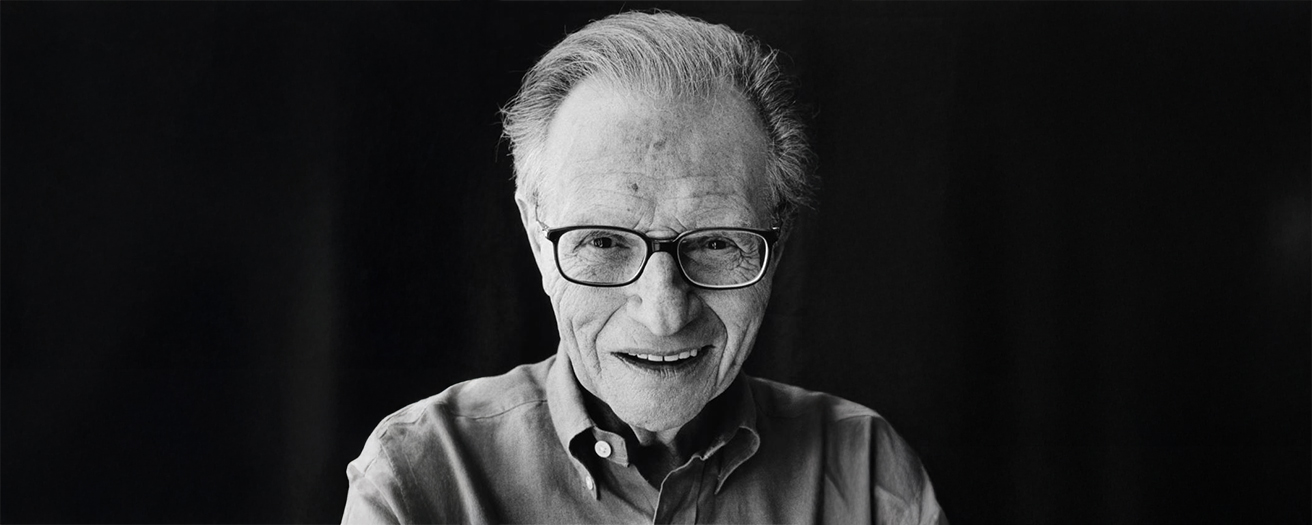
I've had everything—diabetes, lung cancer, and stroke—but I've had a great recovery,” Larry King said in an interview with Brain & Life in September 2020. “When I came back from the stroke, my doctor said I have an indomitable spirit. I didn't jump off a building or anything. I don't know what I did, but I shouldn't be here.”
The folksy TV and radio host, best known for his long-running CNN show Larry King Live, died of sepsis on January 23, 2021, at age 87. In his Brain & Life interview last fall, he spoke about what helped him thrive in the face of whatever life threw at him—which in his final years included separation from his seventh wife, the loss of two children, and even COVID-19. (The infection that caused his death was unrelated to COVID-19.)
In many ways, King's longevity was a miracle. He had a heart attack and bypass surgery in his early fifties, was diagnosed with diabetes and lung cancer in 2017, and had a massive stroke in 2019 that put him in a coma for days and left him unable to walk on his own. As the frequent gambler liked to say, “My father died of a heart attack when he was 46, so I'm playing with house money.” In his mind, King had beaten the odds already. “It's been an amazing run. I have no complaints about life,” he said.
That perspective was tested last summer when King's 65-year-old son, Andy, died of a heart attack and his daughter, Chaia, 51, died a few weeks later from lung cancer. Close with all five of his children, King was living in Los Angeles with his 21-year-old son, Chance, after his stroke and during the pandemic. “Chance has been my lifeline,” King said. “He's always with me. I don't think I'd be here without him.”
The other thing that kept King alive was his work. The former radio broadcaster, newspaper columnist, and author of 15 books—born Lawrence Harvey Zeiger in Brooklyn in 1933—continued to conduct remote interviews for his cable show Larry King Now, even during the pandemic. “The engineer comes to my house every day and sets things up,” he said in September. “I just did [former Trump communications director] Anthony Scaramucci; he's terrific, so opinionated. I feed off that. I get energy from other people. I want to know what makes them tick, which is why I always came at them with different types of questions from other interviewers. I would ask questions like ‘What's it like to be president?’ or ‘What do you fear most?’ I'm not the typical reporter, with the who, what, where, when questions. I'm interested in the human side.”