Joining the fight
As word got out about his diagnosis, Grant started hearing from others who had the disease. The actor Michael J. Fox, founder of the Michael J. Fox Foundation for Parkinson's Research, called to discuss what challenges Grant could take on as an advocate. "He said, 'It's not a death sentence,'" Grant says. "'You can join the fight and use avenues available to you or keep it to yourself. There's no right or wrong way.'"
For Grant, sitting out wasn't an option. Growing up in rural southern Ohio, he relied on caring communities. "I did a lot of farm work in the summer to earn money—cutting and stripping tobacco, baling hay, digging potatoes," Grant says. When his family struggled, people in the area helped despite their own limited means. "We weren't destitute, but I've been on the receiving end of church dinners and funds that provide toys for kids at Christmas when their parents didn't have enough to give gifts," he says. "I've always wanted to give back."
His first thought: Start a foundation and website that would filter and reduce the flood of material on the Internet to a spigot of high-quality information about Parkinson's for those newly diagnosed. But he noticed something as he met more people with the disease and learned about their struggles: For many, the disease seemed to progress faster than his. Even today, seven-plus years after diagnosis, his main symptoms are a tremor in his non-dominant left hand, occasional tremors in his right hand, and a small amount of tremor in his left foot. Although he eventually started taking levodopa, a dopamine replacement drug, he's been on it for just three years. "My gait is pretty good," Grant says. "I consider myself lucky."
Grant credits that difference to his years as an athlete. Research suggests he may be on to something, says Mark A. Hirsch, PhD, a senior scientist in the department of physical medicine and rehabilitation at Carolinas Medical Center, part of Carolinas HealthCare System in Charlotte, NC. Dr. Hirsch is also the senior author of a 2016 research review in Parkinsonism and Related Disorders on how exercise affects the brain in people with Parkinson's.
"Walking or running on a treadmill, balance training, and interval training using a stationary bike triggered improvements in anatomy and function within key brain areas affected by Parkinson's disease," Dr. Hirsch says, summarizing the findings of eight studies involving 144 patients. "Also, scores on standardized tests of Parkinson's disease motor function improved."
These findings are leading researchers and clinicians to think of exercise as therapeutic and potentially protective. "Many animal and well-designed human studies provide compelling evidence that exercise may slow the progression of the disease," says Dr. Jankovic.
Grant's experience got him thinking. "Exercise and nutrition are about the only things we can control," he says. With that in mind, he launched the Brian Grant Foundation in 2010 as a clearinghouse for information related to exercise and nutrition and a go-to destination for resources, including community programs and how-to workout videos tailored to people with Parkinson's disease. The organization works with a 12-member medical advisory board that includes several neurologists at Oregon Health & Science University (OHSU) in Portland, along with experts in physical therapy, exercise physiology, balance training, natural and nutritional medicine, and mental health, including a family physician who has Parkinson's. "We want to be the global leader for exercise—the one place you can find everything you need," says foundation director Cherise Bjornsgard. "Brian is joining the community just when it needs an inspiring person with fresh energy to champion that cause."
Getting physical
Grant's first experience in an exercise class for people with Parkinson's revealed how much work was needed. "The local courses I attended were for elderly people—things like getting up from chairs and changing your gait," he says.
That kind of experience can be devastating for high-functioning people with Parkinson's, says Dr. Jankovic. "You don't want to send someone who is just starting to experience symptoms to a class with people in wheelchairs," he says.
How to give high-functioning people the challenge they require? That was the question Kimberly Berg, a certified clinical exercise physiologist in Portland, pondered when she took over an exercise class for a group of 20 Parkinson's patients at a private health club. Berg had been working with researchers at OHSU to develop exercise protocols and a series of workout routines for people with Parkinson's disease. The class was a mix of low- and high-functioning people, which was great for support, Berg says, but because the class was always taught to the lower level, the high-functioning people seldom got a good workout. Grant could have joined a regular exercise program, but he wanted the support he would get from a class designed for people with Parkinson's, and he wanted an instructor who would be aware of the specific needs of people with Parkinson's.
Berg had an idea. She divided the class by functional level and began pushing participants in ways appropriate to their abilities. "I added stations, music, and drumming, and kept pushing. All of a sudden we had this group that just flourished." Grant got wind of Berg's efforts and approached her to do a pilot class that would kick up the intensity even higher.
Motivation to move
At Grant's urging, Berg set up stations on one of the basketball courts at Beaverton Hoop, a local all-court YMCA, for a trial Parkinson's program she called a boot camp. "I used weights, kettlebells, and different tools for participants," Berg says.
At one point, Berg told participants to take a water break—important for avoiding dehydration. Grant instead started shooting hoops. "I said, 'Get back here,'" Berg says, "and somebody said to me, 'No, don't stop him. Brian hasn't picked up a ball in years.' Something about that activity made him feel more capable. If you start sweating, something familiar inside comes alive."
Before starting an exercise program, Dr. Hirsch recommends seeing a physician who can rule out contraindications such as heart problems, then turning to a physical therapist who specializes in treating neurologic patients. "The physical therapist will do another evaluation and develop an exercise program that takes into consideration fatigue, depression, impairment, limited mobility, and cardiovascular problems," he says.
Berg signed on as the lead coach of the Brian Grant Foundation and developed the pilot class as a community program called the Powering Forward Boot Camp, which the foundation hopes to offer nationally. The foundation also launched a Powering Forward Wellness Retreat—a nine-hour program of nutrition education, cooking demonstrations, counseling, and community-building events like a wine and cheese hour.
All things exercise
Grant's foundation posts about a dozen exercises on its website that are adaptable to people of varying abilities and available in 10, 15, and 30-minute workouts. In a series of videos, Berg explains each move, demonstrates it, and has someone with the disease perform the workout while Berg provides coaching tips.
Other exercise protocols for Parkinson's disease exist, but exercise information tends to come in piecemeal, disjointed, or highly local ways, Bjornsgard says. "You'll find boxing programs in Texas and dance programs in New York. Our dream is to create a non-biased community where everyone can share what they're doing and put everything in one spot." What's striking about the Grant site is its patient focus and unfettered access to high-quality videos, says Michael J. Zigmond, PhD, a professor of neurology at the University of Pittsburgh. "They have a very mixed range of exercises, which I think is important, because we don't know which types of exercise are best," he says.
Tapping connections
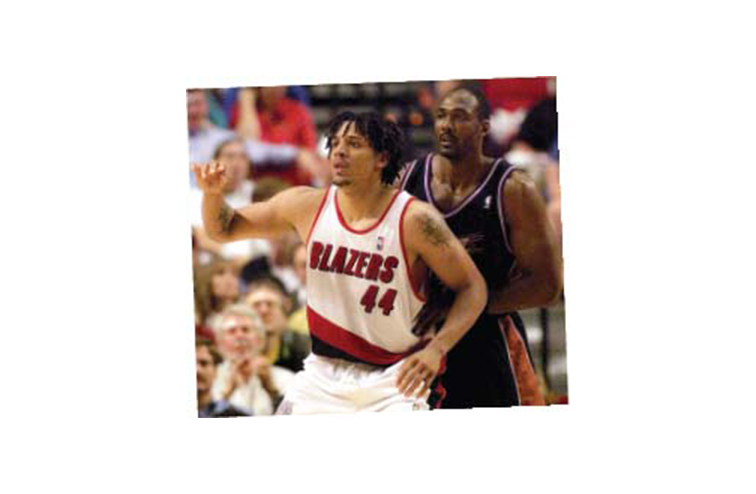
Meanwhile, Grant has used his contacts as a professional athlete to raise awareness and funds. Even before starting his foundation, he organized a gala called Shake It Till We Make It. "That was a special night," Grant says. "Pat Riley [who coached the Miami Heat while Grant was on the team] made a speech. Retired and active NBA players attended, and even Michael J. Fox and Muhammad Ali [the boxing champ and fellow athlete with Parkinson's] showed up." The $350,000 in proceeds went to the Michael J. Fox Foundation that first year, but the event has since continued as an annual gala and golf event to raise funds for Brian Grant Foundation programs. At another Shake It Till We Make It gala, the top auction prize—which raised $36,000 of the event's $500,000 take—was an Alaskan fishing trip with Grant and his old on-court nemesis (and now friend) Karl Malone.
The foundation's next major initiative is the Parkinson Power Through Project, a partnership with the World Parkinson Coalition that encourages people to exercise individually or in teams (see "Powerful Partnership."). Thanks to Grant's connections with the NBA, the association will spotlight the project at the NBA All-Star game in Toronto on Valentine's Day.
Leading by example
Grant continues to model an active life in the hopes that exercise will help slow the progression of his disease. Grant's doctor, John Nutt, MD, a professor of neurology and emeritus director of the OHSU Parkinson Center of Oregon, encourages Grant to remain physically active but cautions him against pinning too much hope on exercise. "Everyone's Parkinson's follows its own course," he says. "Here is somebody who is a fabulous athlete and in very good condition, and yet saw symptoms of Parkinson's disease at age 36." So exercise didn't prevent the disease, but it may prevent it from being worse. "Moving your body through various forms of exercise, especially those that require balance and agility, is clearly better than not moving," Dr. Nutt says.
Motivating others has been an upside to Grant's diagnosis. "A lot of professional athletes see themselves as warriors who fight not only for themselves but for the team," Dr. Nutt says. "I think now Brian sees the Parkinson's community as part of his team, and he's fighting for them."
In Bjornsgard's view, Grant's athleticism, history of depression, and down-to-earth frankness give him power to effect change. "When Brian stands up in a room and says, 'This is hard for me, too, but you don't have to do this alone. Come join me. Come exercise,' there's such strong energy you can almost touch it. That's a huge contribution to the Parkinson's community."
Research has increasingly shown that exercise is key to treating Parkinson's in every stage.
Brian Grant's intuition about how exercise can help people with Parkinson's disease coincides with renewed scientific interest in the topic.
"When I started in the field 20 years ago, it was generally thought that exercise for people with Parkinson's was a waste of time and to be avoided," says Mark A. Hirsch, PhD, a senior scientist in the department of physical medicine and rehabilitation at Carolinas Medical Center, part of Carolinas HealthCare System in Charlotte, NC, and lead author of a 2016 review of exercise studies in the journal Parkinsonism and Related Disorders. "Scientific evidence now indicates that exercise affects the brain and can potentially slow progression of the disease in humans," he says.
Still, many caveats remain, says Michael J. Zigmond, PhD, a professor of neurology at the University of Pittsburgh. "In many human studies, the number of patients is small, the duration of the trial is short, and there's no real attempt to differentiate between relieving symptoms and slowing progression of the disease, which are both important but not the same," Dr. Zigmond says. "I'd put my money on exercise doing both, but we still need more research."
Dr. Hirsch contends that the research as a whole may provide stronger evidence than the outcome of any single small study. So far, the research shows that exercise causes changes in the brain that may positively affect Parkinson's. Among them are increases in gray matter and improved dopamine signaling in parts of the brain involved with motor movement, according to Dr. Hirsch's review and a 2007 study in the Journal of Neuroscience. Exercise may also boost levels of proteins called neurotrophic factors that seem to protect dopamine-producing neurons, Dr. Hirsch's 2016 review found.
"Several studies show that people with Parkinson's disease who exercise have more endurance and less rigidity, and their balance and gait difficulties progress more slowly than people who don't exercise," says Joseph Jankovic, MD, FAAN, of Baylor College of Medicine in Houston. In one 2013 study, in JAMA Neurology, led by Lisa M. Shulman, MD, FAAN, of the University of Maryland in Baltimore, three groups of people with Parkinson's disease tried three types of exercise—a combination of stretching and resistance training, low-intensity treadmill walking, and high-intensity treadmill walking—and all three groups were able to walk farther in a six-minute test after four months. Another small 2013 pilot study of four men with early Parkinson's disease published in the journal NeuroReport found that those who were randomized to do treadmill walking exhibited brain changes not seen in the patients who didn't exercise. (The work of the investigator who led the study, Beth Fisher, PhD, of the University of Southern California, is among the research that Dr. Hirsch highlights in his review of significant findings.) The exercisers improved both their walking performance and their ability to turn 90 degrees—significant because in people with Parkinson's disease, improving on one physical task doesn't necessarily translate to improving on a different task.
Research continues, but human studies are expensive and challenging. For example, given that Parkinson's disease manifests differently in every person, it's difficult to determine whether an intervention is causing someone to progress more slowly, since it's hard to say how that person might have progressed without it.
To learn more, a multicenter randomized controlled trial of 126 people with Parkinson's disease funded by the National Institutes of Health is underway. Called the Endurance Exercise in Parkinson's Disease trial, it will compare the effects of moderate and intense aerobic exercise to no exercise. Researchers are also exploring how to motivate people with Parkinson's disease to be active. One tool being investigated is a wearable, glasses-like device that provides visual cues, such as overlaying lines on the floor and auditory prompts similar to a metronome beat to help people initiate and continue movement. Smart glasses also let people make hands-free calls for help. A built-in GPS can also help caregivers or family members locate the wearer.