Vision problems
In 1999, Ha was an undergraduate at the University of Texas at Austin, adjusting to life in a campus apartment when she first experienced blurred vision in one eye. "I assumed it was a dirty contact lens," she says. But when the blurriness persisted, she went to a neuro-ophthalmologist, who suspected multiple sclerosis (MS). He ordered an MRI, blood work, and a lumbar puncture to look for MS and to rule out the possibility of other conditions such as lupus and rheumatoid arthritis. Like MS, NMO attacks myelin, the fatty substance that surrounds nerves and promotes the efficient movement of nerve signals from cell to cell. In the case of NMO, the attack is on the optic nerves and the nerves in the spinal cord. "Early symptoms can include blurred vision and pain behind the eyes," notes Timothy L. Vollmer, MD, FAAN, professor and vice chair of clinical research at the University of Colorado in Aurora. "Other symptoms can include a sensation of a squeezing band around the abdomen or the extremities, followed by loss of sensation and increasing weakness in the limbs," he says. "Diagnostic tests include blood work to look for autoimmune antibodies and brain and spinal MRIs."
A wider range of symptoms can include nausea and vomiting, hiccups, difficulty swallowing, and even narcolepsy and other disorders, says Jeffrey Bennett, MD, PhD, FAAN, professor of neurology and ophthalmology at the University of Colorado. In fact, in 2007, experts coined the term neuromyelitis optica spectrum disorder (NMOSD) to encompass the range of symptoms. Revised criteria for NMOSD were suggested in a review of the medical literature by an international panel of experts in the July 14, 2015, issue of Neurology.
Persistent paralysis
"Two and a half years after I first developed optic neuritis, I experienced my next NMO symptom: tingling in one of my legs," Ha recalls. Soon after, her symptoms included numbness in her arms and legs and various bouts of paralysis, including an episode that worsened over three days until she was paralyzed from the neck down. "I went to the ER and was admitted to the hospital, where I spent a few days. Then I was discharged to a rehab hospital for physical and occupational therapies."
For a student finishing college and looking to the future, the experience was frightening. "In your twenties, you're supposed to feel invincible, but while my friends were building careers, I was losing my vision and my ability to move," she says.
Her vision loss continued, and interludes of paralysis came and went. "My neurologist at the time was confident in diagnosing me with MS because I had two MS symptoms—optic neuritis and spinal cord inflammation," Ha recalls. A misdiagnosis of MS is common due to similar symptoms and up until recently a lack of a reliable biomarker for NMO.
Definitive diagnosis
NMO is thought to result from a specific attack on the aquaporin-4 (AQP4) water channel that occurs throughout the brain but in highest density on the optic nerves and spinal cord. More than 80 percent of people with NMO and NMOSD test positive for an antibody biomarker in the blood called NMO-IgG or AQP4 antibody. It was first reported in 2004 by researchers at the Mayo Clinic in Rochester, MN, after testing patients at the Mayo Clinic and from other clinical practices who were suspected to have NMO. It has been enormously helpful in diagnosing NMO, says Brian Weinshenker, MD, FAAN, professor of neurology at the Mayo Clinic, and one of the members of the team that discovered the antibody and its link with NMO. However, some people have symptoms of the disorder without detectable antibodies, he notes.
Four years after Ha's initial symptoms, her neurologist identified NMO-IgG in her cerebrospinal fluid, and she was officially diagnosed with NMO.
A new normal
By then, Ha had lost enough vision that she could no longer drive, and by 2007, she needed a cane or a guide in order to walk safely in unfamiliar places. Since 2007, her vision has remained relatively the same. She can "see" objects within 10 or 12 inches of her face. Otherwise, she says she sees the world as if looking through a steamy mirror after a hot shower. (Being legally blind does not necessarily mean a complete loss of vision. Dim vision is common.)
"By 2007, I realized that my new reality was permanent vision loss and periodic bouts with other symptoms," she says. "I remember standing in the kitchen trying to make a peanut butter sandwich. It ended up a mess. I couldn't even make a sandwich! I wasn't sure if I would ever cook again."
Treatment options
No cure exists for NMO and no drugs approved by the US Food and Drug Administration (FDA) can restore the vision loss; the optic nerves eventually atrophy and cannot be repaired. However, therapies are available for managing symptoms, stopping attacks, and helping people live full lives, according to the National Institute of Neurological Disorders and Stroke.
After her initial symptoms, Ha was prescribed glatiramer acetate (Copaxone), an MS drug, which, like many MS treatments, is ineffectual against NMO and may even make it worse. What did work were IV steroids. "We prescribe corticosteroids for acute attacks, and when they fail we prescribe plasma exchange [also known as PLEX, a procedure that removes harmful antibodies from the bloodstream]," says Dr. Weinshenker.
Drugs that suppress the immune system and keep it from attacking nerves and worsening symptoms may also help manage the disease and prevent acute attacks. Ha says rituximab (Rituxan), a monoclonal antibody typically used to treat cancer, non-Hodgkin's lymphoma, and, in certain situations, MS and adult rheumatoid arthritis, has been working for her. "Rituximab is the most effective NMO therapy," says Dr. Vollmer. Given intravenously at appropriate intervals determined by the physician, rituximab specifically targets and kills the B cells that attack myelin, helping to prevent the attacks that can devastate the optic nerves and spinal cord.
Although rituximab is not yet approved by the FDA for treating NMO, small trials have shown great promise, and it is widely prescribed, says Dr. Weinshenker. For example, in a five-year study of 30 NMO patients published in JAMA Neurology in 2013, rituximab therapy had a 90 percent success rate in controlling symptoms and preventing attacks.
But misconceptions still surround the powerful drug. "Some neurologists assume rituximab has toxicities similar to more powerful chemotherapies," says Dr. Vollmer. "But it's not chemotherapy; it's an antibody that targets B cells. We have more than 10 years' experience using rituximab in NMO."
Solace in the kitchen
Initially, Ha felt sorry for herself, wondering how she was going to live alone, pay her bills, even cook her meals. "This is my new life and it really sucks!" she recalls saying. She had gone from preparing Thanksgiving dinner for relatives one year to not being able to make a peanut butter sandwich the next. But her spell of self-pity didn't last long. Becoming independent was crucial—and relearning to cook was an important first step. She started with basic knife skills, using a butter knife at first. She relearned how to boil water. "One step at a time. How do I use a larger, sharper knife? How do I pan-fry something? I took baby steps to learn how to adjust."
For help outside the kitchen, Ha received training in orientation and mobility, independent living, and braille through programs at the Lighthouse and Department of Assistive and Rehabilitative Services in Houston.
Fortitude against loss
Loss is not new to Ha. Her mother died of cancer when Ha was just 14. That formative experience, Ha says, helped her process her own loss.
Ha's parents emigrated from Vietnam in the mid-1970s. She was born in Southern California in 1979, then moved to Houston for most of her childhood and adolescence. "Growing up, I was embarrassed by the traditional Vietnamese foods my parents made me eat—pork belly, catfish. I used to think, 'Why can't I eat normal things like bologna and cheese?'"
Then she watched her mother, a social worker, endure chemotherapy and succumb to cancer. "My mother was dying of cancer, and I felt that I couldn't fight with her like a normal teen because I'd feel guilty. Of course, I realize now that all those experiences helped me become who I am today."
When Ha's mother died, those traditional Vietnamese recipes were lost. As an adult adjusting to her vision loss, Ha set out to re-create her mother's dishes, using Vietnamese cookbooks, her father's memories, and her own exceptional sense of taste.
The blind cook
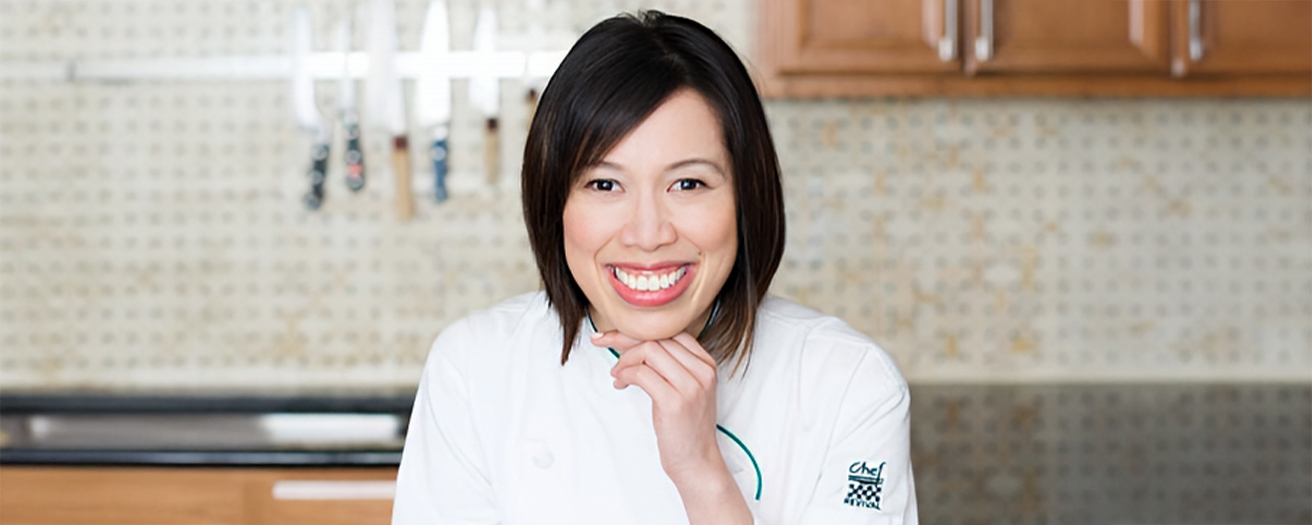
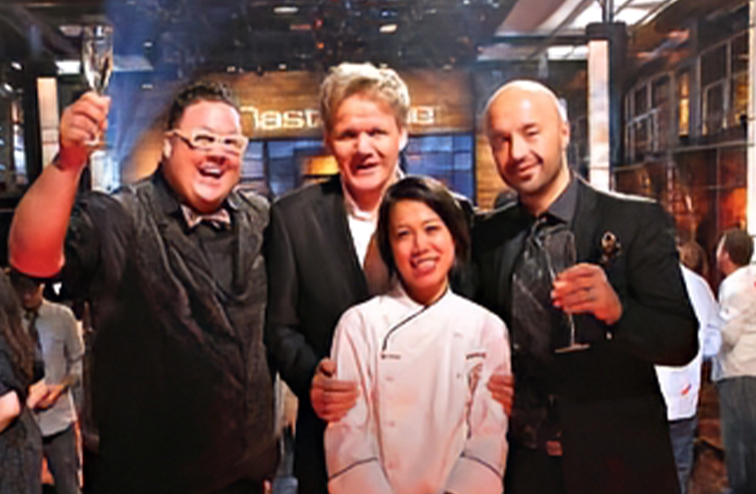
On track to become a software consultant before her vision deteriorated, Ha launched a blog, theblindcook.com, instead. Using voice-recognition technology and text-reading programs, she began sharing recipes, restaurant recommendations, and advice to a growing audience that not only appreciated her culinary tips but also her life lessons. Eventually, the blog caught the attention of producers at MasterChef, who contacted Ha and suggested she consider auditioning for one of the show's coveted contestant spots.
In the kitchen, Ha not only navigates by sense of touch but also employs taste, hearing, and smell to determine whether ingredients are fresh and cooked to the right consistency and flavor. She also uses a "talking" food scale and thermometer, a liquid level indicator, and appliances marked with "bumps." As for relearning those knife skills? She has occasionally cut herself at work, but never seriously.
As a contestant on MasterChef, Ha was not permitted to use any special equipment, but Fox hired an assistant for her who was allowed to describe the appearance of dishes in progress and fetch tools. The assistant followed strict guidelines that assured Ha had no advantage over her competitors.