How spinal surgery helped Gloria Gaynor beat chronic pain and return to the stage

After decades of pain and multiple spinal surgeries, advances in medicine and a commitment to movement helped the disco icon reclaim her life.

By Gia Mazur Merwine

December 2025

Gloria Gaynor smiling wearing a champagne colored outfit

Gloria Gaynor, 82, endured years of pain after a 1978 accident that injured her back and led to several spinal surgeries. Photograph by Stefan Radtke

It was 1978, and disco's reigning queen was in her element.

Under the bright lights of New York's Beacon Theatre, a then-35-year-old Gloria Gaynor sang to a crowd that pulsed to every beat. Mid-performance, she accidentally fell back over a small monitor on the stage.

“The next morning, I woke up paralyzed from the waist down,” Gaynor, now 82, recalls. “I called my boyfriend and said, ‘Please come. I can't move my legs.’”

Gaynor was on the brink of superstardom, but as she lay in a hospital bed, she wasn't thinking about chart-toppers. Doctors discovered she had ruptured a disc in her lower back and would need emergency spinal surgery. She spent three months in the hospital, where she says “they used pulleys to help me get my muscle strength back. I'll never forget that.” That first spinal fusion surgery restored her mobility but not her freedom from pain.

“The pain started after they got rid of the numbness,” Gaynor says. “It was grueling.”

Despite the pain, within months she was in a back brace and recording music in Los Angeles. (While Gaynor was in the hospital, she learned her record label was not renewing her contract, but it fortunately then appointed a new president who reversed that decision.) During this trip, Gaynor recorded, “I Will Survive.”

Over the years, Gaynor's back pain remained relentless, sending her back to the operating table more than once. The vertebrae above her first fusion eventually weakened, requiring another surgery in 1997 in which doctors inserted two rods to stabilize the area.

By the mid-2010s, she had developed spinal stenosis, a narrowing of the spaces within her spine that caused intense pressure and pain. Around 2017, Gaynor was walking down a New York City street when a sudden wave of excruciating pain stopped her in her tracks so severely that she had to flag down a taxi just to make it home.

Gaynor's final reconstruction, done in 2018 by Los Angeles board-certified spine surgeon Hooman Melamed, MD, FAAOS, involved breaking her spine and rebuilding it with metal rods.

“The day after surgery, I saw my reflection in a glass frame and realized I was standing upright for the first time in 15 years,” she says. “I just cried.”

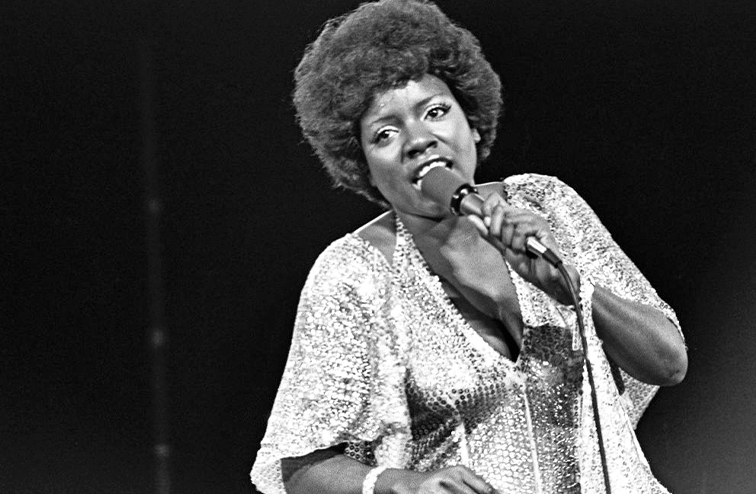
A black and white photo of Gaynor performing in 1978 before the accident
Gaynor performing in 1978 before the accident. Getty Images.

Surgical evolution

According to Michael P. Steinmetz, MD, chair of neurosurgery and director of the Center for Spine Health at Cleveland Clinic, the surgery that helped Gaynor stand tall again reflects just how far spinal medicine has come since her first operation in the 1970s. New materials, techniques, and technologies have transformed spinal fusion from a grueling, high-risk procedure into one that can be done with far greater precision and safety.

Today, surgeons can use biologic materials that encourage bone to grow and fuse more reliably, and minimally invasive methods allow them to stabilize the spine through much smaller incisions. Implants also have evolved—from early bone grafts to lightweight, 3D-printed metals and porous plastics that allow natural bone to grow through them, creating a stronger, more stable repair. In addition, advanced imaging, computer-guided navigation, and even robotics now help surgeons plan and execute each step of the procedure with remarkable accuracy.

The same advances that reshaped modern spine surgery also helped Gaynor reclaim her posture, confidence, and rhythm, both on stage and in life. Now, Gaynor is promoting a new EP, “Happy Tears,” available on all streaming platforms, and preparing for another tour, determined to keep doing what she loves. Her latest songs—empowering tracks such as “When I See You” and “’Fida Known,” which Gaynor says picks up where “I Will Survive” left off—reflect not only her faith but also her physical fight to keep moving.

“I wanted to keep making music,” she says. “It's always been my purpose to uplift and inspire people. After everything I've been through, that's more important than ever.”

Long-term outcomes

Still, even the best techniques can't stop time. Spinal surgery may correct one problem, but it can set the stage for others down the line. Each time surgeons fused a new section of Gaynor's spine, the vertebrae above and below took on more stress—a complication she says caused many of her later problems.

Once part of the spine is fused, its natural movement changes, and those altered biomechanics can't easily be undone, says Charles E. Argoff, MD, professor of neurology and urology and director of the pain management fellowship at Albany Medical College. Specialists call this “adjacent-segment disease,” and it's one reason some patients who undergo spinal fusion face additional surgeries over the years. Dr. Steinmetz says this happens for a few key reasons.

“Degenerative spine disease progresses over time, and surgery doesn't stop disease progression at other levels,” he explains. “The bone may not fully heal (nonunion), or screws and cages may loosen, often requiring revision within 12 months. Proper surgical technique, alignment, and bone grafting can reduce this risk.” Maintaining good spinal alignment during and after surgery helps minimize strain on nearby vertebrae, he adds.

Lifestyle also can play a role in recovery and long-term stability, Dr. Steinmetz notes. Regular exercise, avoiding smoking, controlling diabetes, and maintaining a healthy weight all help support the spine after fusion.

But even with the best habits, the body (and medical technology) can change over time. In Gaynor's case, her later challenges weren't the result of anything she did wrong but rather the limits of what surgeons could do decades ago. Older hardware and alignment techniques sometimes forced the spine into unnatural positions, changes that can affect posture years later.

“Unfortunately, the people who did that surgery put a bracket right in the curvature of my spine, straightening out where your spine is supposed to curve,” she says. “So that made me lean forward. I walked like that for 20 years,” until Dr. Melamed rebuilt her spine and she finally stood straight again.

Managing the pain

For years between operations, Gaynor lived with unrelenting pain that sometimes forced her to sleep upright in a chair. Dr. Argoff says Gaynor's experience mirrors what many people with chronic pain go through on the journey to a successful outcome, which “takes more than a single medicine or single approach.” He encourages a well-rounded plan that includes movement, physical therapy, non-opioid medical options, and appropriate use of invasive procedures. After her final surgery, Gaynor began physical therapy almost immediately to rebuild strength, which she feels made the biggest difference.

In addition to movement and physical therapy, Argoff also recommends non-opioid options as part of a well-rounded plan for back pain. According to studies, drugs such as duloxetine (Cymbalta) have shown modest but meaningful benefit for chronic low back pain, especially when used alongside exercise and self-management rather than as a standalone fix. Recent studies, including a 2021 review in Pain Medicine, suggest duloxetine can help improve function and reduce pain intensity for some patients when taken consistently.

When pain stems from the small joints of the spine, called facet joints, targeted procedures may help. Radiofrequency ablation uses controlled heat through a thin needle to interrupt the nerves that carry pain signals from those joints. Modern, image-guided techniques can provide months of relief for well-selected patients, according to multiple recent studies and reviews published since 2020 in academic journals.

Injections still play a role, but expectations matter. Epidural steroid injections can modestly improve pain and mobility for people with spinal stenosis or pinched nerves, but the effects tend to be temporary, according to a 2025 review in Neurology.

Dr. Argoff notes that not all “nerve pain” medications work for everyone, either. Drugs such as gabapentin and pregabalin often provide little benefit for most people with chronic low back pain unless a specific nerve injury is involved, and they can cause side effects like dizziness or fatigue and may contribute to the risk of breathing difficulties in people also taking opioids. A recent study also raised caution about using gabapentin in older patients. That's why, Dr. Argoff emphasizes, pain management should be personalized and revisited over time.

And medication alone is rarely enough, he adds.

“Most people don't do well long-term following spine surgery,” Dr. Argoff says. “Yet once it's done, it's done—you’ve changed the biomechanics of the spine in such a way that it's not reversible.”

Spinal fusion can be life-changing for the right patient, he adds, but it's not a guaranteed fix. The difference between lasting success and lingering pain often comes down to who's chosen for surgery, the surgeon's skill, and the patient's access to ongoing care.

“Gloria appears to have been operated on by an excellent surgeon,” Dr. Argoff says. “She received care at a very specialized facility. Access probably wasn't an issue. That's not always the case in our health system.”

It's not just the surgery, either, he adds—fitness, exercise, and movement play a role, too. Motion itself is lotion, he says. Gaynor believes her body healed because she never stopped moving: “You have to keep it up, because your body will quit on you.”

Free brain health insights

Our email newsletters deliver tips, resources, and inspiration straight to your inbox.

Subscribe

Active in body and mind

Even in her 80s, Gaynor's commitment to staying active hasn't wavered. On tour, she squeezes in workouts wherever she can—hotel gyms, backstage areas, even before performances. She trains three times a week with her CrossFit coach over WhatsApp, keeping her strength up no matter where her schedule takes her. That dedication paid off last fall when she took the stage in Brazil at Rock in Rio, one of the world's largest music festivals, performing for a crowd of more than 150,000 fans.

Dr. Steinmetz agrees that staying active is one of the most important factors in recovery after spinal fusion.

“Physical therapy and regular movement are vital for supporting spine health, promoting bone healing, and improving overall mobility and strength,” he says. “We recommended general aerobic activity and core-strengthening exercises.”

In a testament to her belief that learning, like movement, keeps you young, Gaynor went back to school at 65 and earned a bachelor's degree in psychology from Walden University over six years while still touring the globe. That kind of commitment, she says, isn't just about staying fit but staying able. It's a daily reminder that progress comes from consistency, not perfection. She laughs while recalling how a friend could still touch the floor without bending her knees at age 70.

“It occurred to me that the reason she could do that was because she had never stopped doing it,” Gaynor says. “That's the answer. If you want to keep doing things later in life, you have to never stop doing them.”

Safety and success

For Gaynor, discipline went hand in hand with opportunity. She had the benefit of world-class care and the means to keep her recovery on track, a reality not shared by everyone facing chronic pain or spinal surgery. Specialized surgeons, rehabilitation programs, and ongoing exercise support can be difficult to obtain, especially when insurance coverage or geography limits options.

Dr. Argoff encourages patients to advocate for themselves by seeking second opinions, researching hospitals’ spine programs, and asking questions about outcomes and experience. In complex cases, he says, “where you go first matters.” Even in the best care, complex surgical procedures involve specific risks, so knowledge and preparation go a long way.

“Technology and materials have advanced, but outcomes still depend on expertise,” Dr. Steinmetz says. “Patients should look for surgeons and centers that perform high volumes of spine surgeries, as experience is closely tied to safety and success.”

And setting realistic expectations is key, he adds.

“When done for the right reasons and without complications, spinal fusion combined with nerve decompression can significantly reduce pain and disability, allowing most patients to resume normal activities,” Dr. Steinmetz says. “But patients should understand that the goal is often improvement, not perfection—relief, not necessarily a pain-free life.”

Yet even with top surgeons and technology, recovery ultimately comes down to something more personal: the strength to keep going when the process feels endless. For Gaynor, that strength has always come from faith. It steadied her through the pain, and she never stopped praying.

“When I was in the hospital, I prayed an awful lot and still do,” she says. “God's gotten me through everything.”

This mindset kept her moving forward when recovery felt impossible. Gaynor's discipline, optimism, and refusal to give up captures the essence of how the body and mind work together in healing, Dr. Argoff says.

“Her story is wonderful, but it's also a reminder: the combination of great care, determination, and belief can make a huge difference,” he says. “She's truly motivated and works hard to keep her strength and flexibility. That perseverance, that Rocky Balboa approach of ‘I'm not going down,’ is what propels people.”

Today, Gaynor says she's “absolutely pain-free.” She credits her surgeon's expertise and her own discipline and unwavering faith for getting her through, and she maintains that regimen of prayer, gratitude, and movement that helped her rebuild her life.

Gaynor also continues to bring her message of encouragement, empowerment, and hope to audiences worldwide through her music. Her legendary song, “I Will Survive,” has been shouted in nightclubs, at weddings, and in karaoke bars for nearly five decades as a universal anthem of strength and resilience. But for Gaynor, it's also the foundation of who she is and what she stands for.

“It isn't just a song, it's a mindset,” she says. “If I have faith in God and faith in myself, I can overcome.”


Correction (January 15, 2026): A previous version of this article stated that Gloria Gaynor was 29 years old in 1978. It has been corrected to say that she was 35 years old.

More from Gloria Gaynor

In this episode, Gloria Gaynor talks about her journey in music and opens up about living with a spinal cord injury (SCI), undergoing surgery, and navigating the long road to recovery.