It started with a mystery: Why do residents of Okinawa, Japan, live longer—and with better health—than people anywhere else on earth?
Dan Buettner, an explorer, author, and National Geographic Fellow, was intrigued by data from the World Health Organization showing that Okinawans live into their eighties, nineties, and even 100s—with little disability or dementia. At that time (the early 2000s), Buettner was leading scientific expeditions focused on solving mysteries, so he pitched the “mystery of longevity” to National Geographic and got the green light. He subsequently embarked on wide-ranging research, whose latest iterations include the Netflix series Live to 100: Secrets of the Blue Zones and the book The Blue Zones Secrets for Living Longer.
Buettner and a team of researchers from the University of Minnesota and the National Institute on Aging identified five places around the globe—the Okinawa archipelago; Sardinia, Italy; the Nicoya peninsula in Costa Rica; Ikaria, Greece; and Loma Linda, CA—where people enjoy extraordinary longevity and high quality of life. “We were looking for the correlations among these five regions, which we called blue zones because we circled them on a map in blue ink. We hypothesized that there were commonalities in their lifestyles that led to longevity,” Buettner explains.
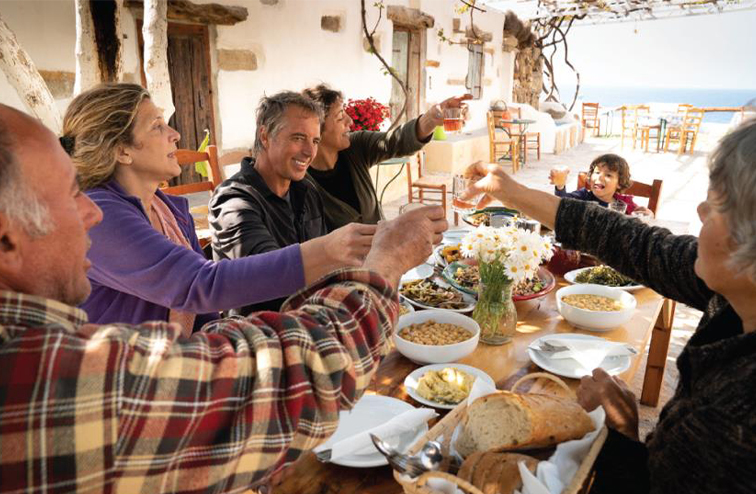
After collecting data on diet, exercise, social interactions, and other factors, he and his team discovered patterns: The people in these areas mostly eat a whole-food, plant-based diet; they have strong social connections; and they participate in regular physical activity. “People engage in natural movements like walking, gardening, and manual labor,” Buettner says.
That's not so for most Americans, says Janet L. Jankowiak, MD, a retired geriatric and behavioral neurologist in Boston who has interviewed elite female athletes in their seventies, eighties, and nineties for an upcoming book on resilience. “Americans tend to be sedentary, with spurts of exercise at the gym,” she says. “People in blue zones are active throughout the day, with most still working into their nineties. Gardening is a part of life, as is raising animals. And walking and biking are major means of transportation.” The benefits of even light exercise were demonstrated in a 2022 review of seven studies in Sports Medicine, which reported that just a few minutes of walking after a meal significantly lowers blood sugar levels.