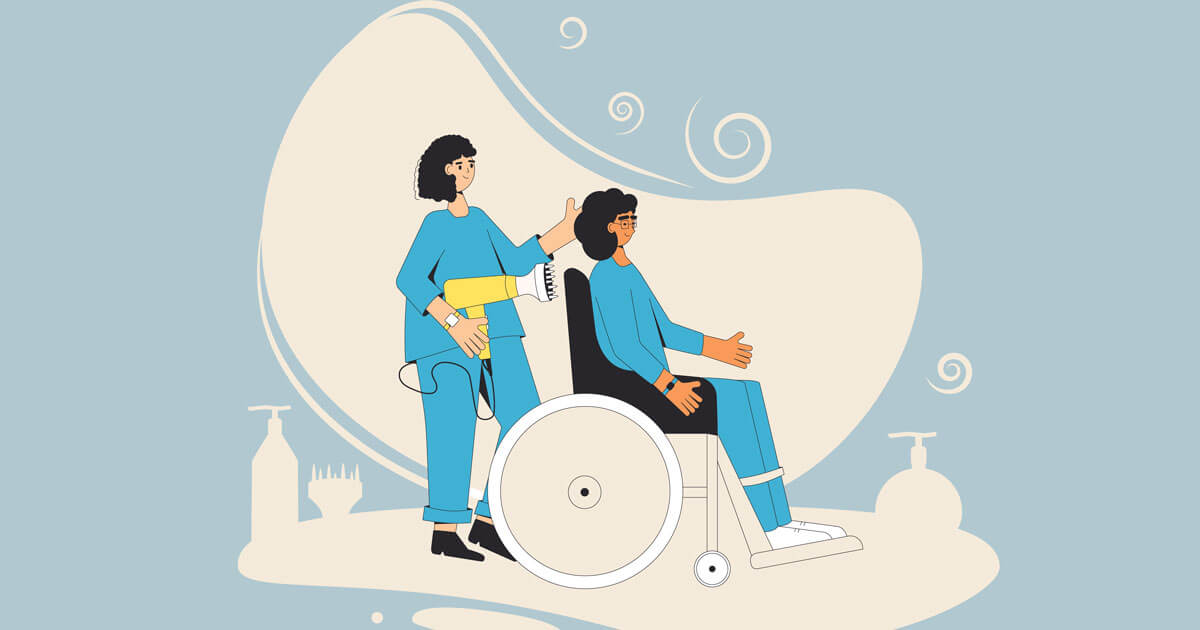
Salons are required to provide necessary accommodations for any clients with disabilities, according to the Americans with Disabilities Act. In many cases, that may just mean they have handicap parking spaces, wheelchair ramps, and easy bathroom access, says Katrina Venzor-Vargas, director of the disability-friendly Morgan's Salon in San Antonio. To ensure that your next salon visit is as positive and comfortable as possible, consider these tips.
Request a consultation
It helps to see the facility before you book anything, says Jessica Noonan, a hairdresser and salon owner in New York City. A visit can help you gauge how comfortable and manageable it is. “It's not enough that the salon has a wheelchair ramp,” says Janira Obregon, a model from Queens, NY, who has spastic quadriplegia and cerebral palsy and uses a wheelchair. “You want to make sure the bathroom is big enough for a chair, too.” She also recommends paying attention to whether the place is loud, the music is soothing or jarring, the staff seems calm and patient or harried and rushed, and the lighting is calming or too bright. “Usually you'll know instinctively whether the salon is a good fit for you,” says Obregon.
Inquire about training
Some salons, like Barber's Blueprint in New York City, have worked with groups that help businesses make spaces more accessible to people with autism or sensory processing disorders. But employees don't need to go through a formal program, says Venzor-Vargas. “You want a place that's had experience with different disabilities and employees who have the patience to work with you,” she says.
Book at a quieter time
Find out when the salon is least likely to be crowded, suggests Noonan. If you have sensory sensitivities or otherwise get upset by noise, see if the staff can accommodate you before or after hours.
Bring a friend
Ask a family member or buddy to accompany you to help with transferring from station to station and providing moral support, if you need either.
Be open
Clearly explain your disability and special needs. When stylists understand your situation, they can help you better.