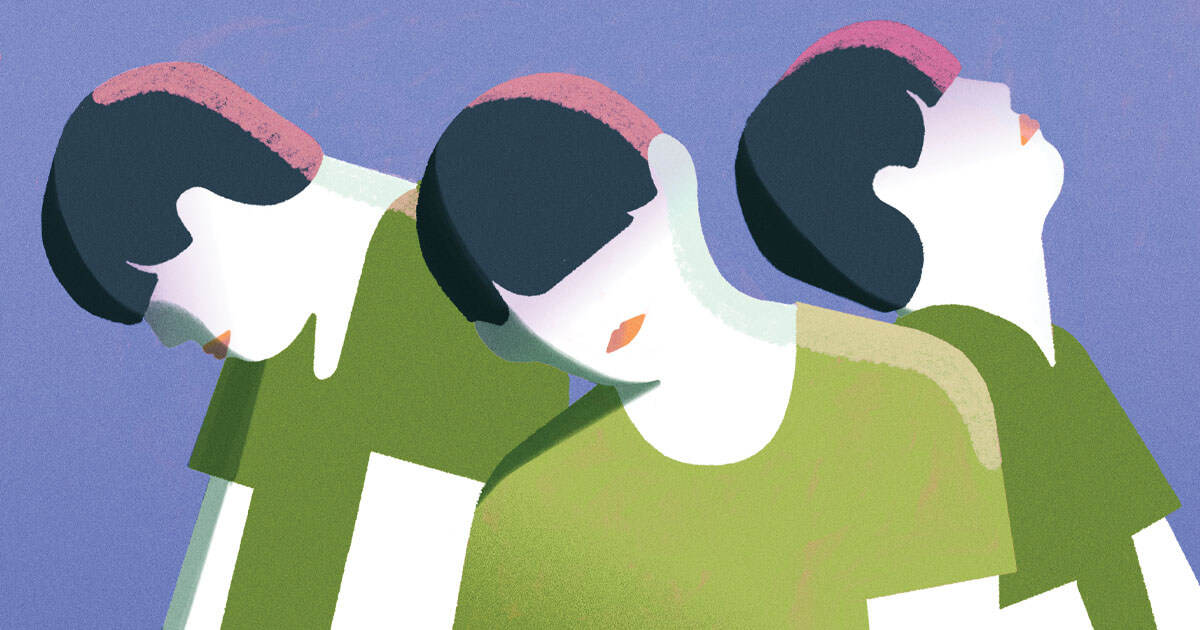
Dystonic movements and postures are often:
- Patterned and twisting
- Sustained, repetitive, or intermittent (possibly including shaky or jerky movements)
- Started or made worse by intentional movement
Dystonia can also be associated with non-movement symptoms such as depression, anxiety, and pain.
Symptoms can vary widely from person to person. Dystonia can affect a single body area (focal dystonia) or multiple areas. Cervical dystonia, which is focal dystonia of the neck, is the most common type of dystonia.
Dystonia often starts slowly and it may worsen over time. Learning about symptoms, diagnosis, and treatment options can help you have more informed conversations with your care team.